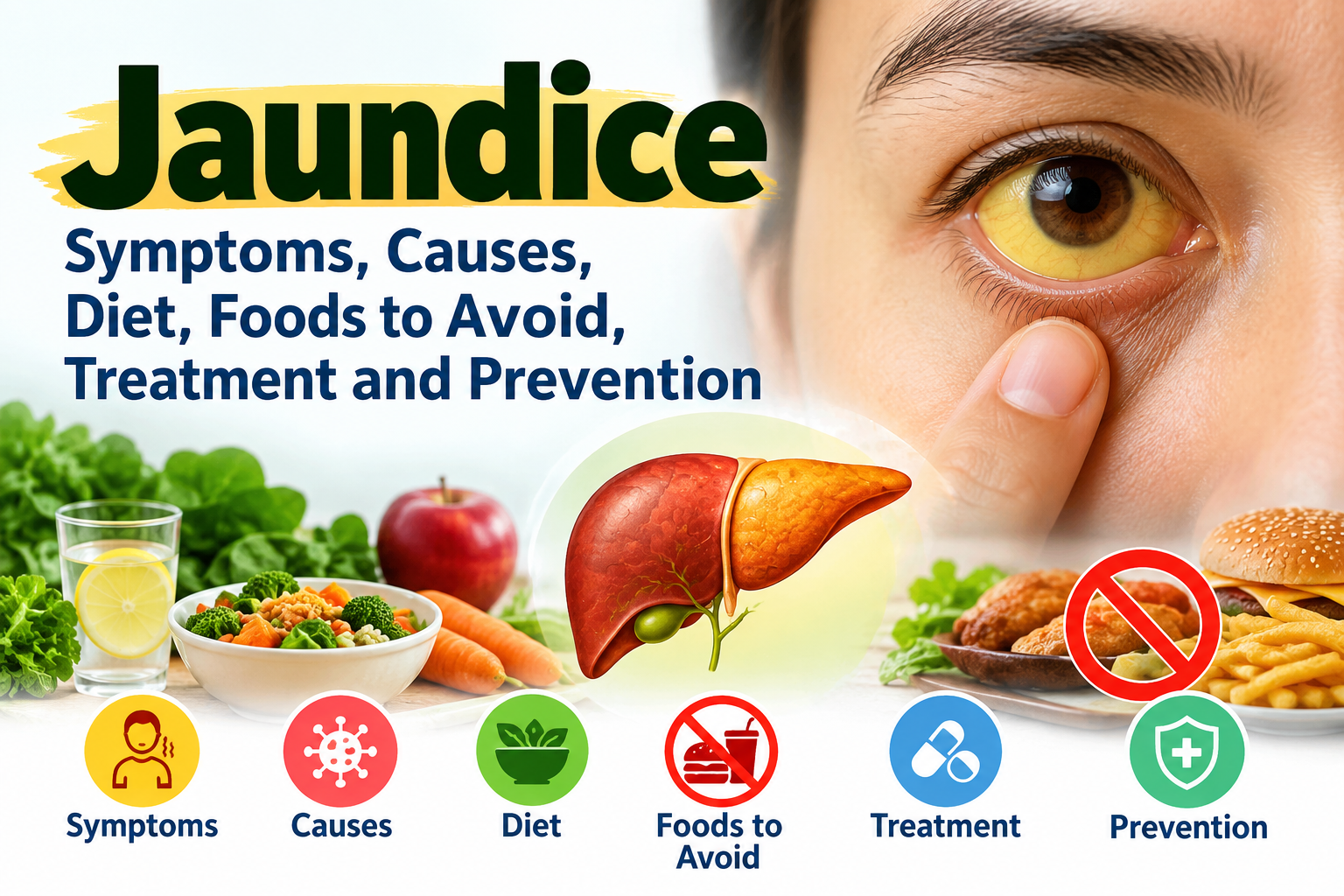
Jaundice: Symptoms, Causes, Diet, Foods to Avoid, Treatment and Prevention
Jaundice is a condition in which the skin, whites of the eyes, and sometimes mucous membranes become yellow because of an increased level of bilirubin in the blood. Jaundice is not a disease by itself. It is usually a sign of an underlying problem involving the liver, gallbladder, bile ducts, blood cells, or other parts of the body.
Depending on the cause, jaundice can be temporary and mild or may indicate a serious medical condition requiring prompt treatment. Common causes include viral hepatitis, alcohol related liver disease, gallstones, certain medicines, hemolysis, and other liver or bile duct disorders.
A healthy diet and adequate hydration can support recovery in some conditions, but diet alone cannot treat the underlying cause of jaundice. Anyone with unexplained yellowing of the eyes or skin should seek medical evaluation.
What Is Jaundice?
Jaundice occurs when bilirubin accumulates in the bloodstream.
Bilirubin is a yellow substance produced when old red blood cells are broken down. Normally, the liver processes bilirubin and helps eliminate it through bile. If bilirubin production increases, the liver cannot process it properly, or bile cannot flow normally, bilirubin can build up in the body.
This buildup can cause:
Yellowing of the eyes
Yellow or yellowish skin
Dark urine
Pale or clay colored stools
Itching
Fatigue
Loss of appetite
The exact symptoms depend on the cause and severity of the condition.
Jaundice Symptoms
The most recognizable jaundice symptom is yellow discoloration of the whites of the eyes or skin. However, several other symptoms may occur.
1. Yellow Eyes and Skin
Yellowing of the whites of the eyes is often one of the earliest noticeable signs. The skin may also become yellow, although this can be harder to recognize in people with darker skin tones.
2. Dark Urine
Urine may become unusually dark, sometimes resembling tea or cola. This can occur when bilirubin enters the urine.
3. Pale or Clay Colored Stool
Reduced bile flow into the intestine can cause stools to become unusually pale, gray, or clay-colored.
4. Itchy Skin
Some people with jaundice experience generalized itching. Itching can be particularly noticeable when bile flow is impaired.
5. Fatigue and Weakness
Underlying liver infections or liver inflammation may cause tiredness, weakness, and reduced energy.
6. Loss of Appetite
People with liver or digestive problems may experience reduced appetite, nausea, or an aversion to certain foods.
7. Nausea and Vomiting
These symptoms may occur particularly when jaundice is associated with hepatitis or other liver problems.
8. Abdominal Pain
Pain or discomfort in the upper right side of the abdomen can occur with some liver and gallbladder conditions.
9. Fever
Fever may occur when jaundice is associated with an infection or inflammation.
10. Unusual Bleeding or Confusion
Severe liver dysfunction can sometimes cause easy bruising, bleeding, confusion, excessive sleepiness, or changes in consciousness. These symptoms require urgent medical attention.
What Causes Jaundice?
There are many possible causes of jaundice. Doctors generally classify them according to where the problem occurs.
1. Liver Related Causes
The liver plays a major role in processing bilirubin. Liver damage or inflammation can interfere with this process.
Possible causes include:
Viral hepatitis
Alcohol-associated liver disease
Fatty liver disease
Certain autoimmune liver diseases
Cirrhosis
Some inherited liver conditions
Certain medications or toxins
2. Gallbladder and Bile Duct Problems
Bilirubin leaves the liver through bile. If bile flow becomes blocked, bilirubin can accumulate.
Possible causes include:
Gallstones
Bile duct obstruction
Inflammation of the bile ducts
Certain tumors or masses
Other structural abnormalities
3. Increased Breakdown of Red Blood Cells
Sometimes the body destroys red blood cells faster than the liver can process the resulting bilirubin. This is called hemolysis.
It can occur because of certain blood disorders, infections, autoimmune conditions, or other medical problems.
4. Medicines and Toxins
Some medicines, herbal products, supplements, and toxic substances can injure the liver or interfere with bilirubin metabolism.
This is why people with jaundice should tell their healthcare professional about all medicines, supplements, and herbal products they are taking.
Types of Jaundice
Jaundice is sometimes categorized into three broad types.
Prehepatic Jaundice
This occurs when excessive breakdown of red blood cells produces more bilirubin than the liver can process.
Hepatic Jaundice
This occurs when the liver itself cannot properly process bilirubin. Hepatitis, liver injury, and cirrhosis are examples of conditions that can contribute.
Post hepatic Jaundice
This occurs when bile cannot flow normally from the liver into the digestive system. Gallstones and bile-duct obstruction are examples.
The distinction is important because treatment depends on the underlying cause.
Jaundice Diet: What Should You Eat?
There is no single medically proven “jaundice diet” that cures every type of jaundice. The appropriate diet depends on the cause, severity, nutritional status, and advice from the treating healthcare professional.
For many people recovering from an uncomplicated illness, the general goal is to maintain adequate calories, protein, fluids, vitamins, and minerals while avoiding unnecessary strain on the liver.
1. Stay Hydrated
Adequate fluid intake is important, particularly if there is fever, vomiting, diarrhea, or poor food intake.
Good options may include:
Water
Oral rehydration solution when appropriate
Soups
Coconut water
Unsweetened fluids
The amount of fluid a person needs varies. People with kidney, heart, or other conditions that restrict fluids should follow their doctor's advice.
2. Eat Small, Frequent Meals
If appetite is poor, eating smaller meals throughout the day may be easier than trying to consume three large meals.
For example:
Breakfast
Mid-morning snack
Lunch
Afternoon snack
Dinner
Small evening snack if needed
The goal is to maintain adequate nutrition without forcing large meals.
3. Include Adequate Protein
Protein is important for maintaining muscle and supporting recovery.
Depending on individual medical circumstances, suitable protein sources may include:
Dal
Lentils
Beans
Chickpeas
Peas
Tofu
Soy products
Low fat dairy
Curd or yogurt
Eggs, if included in the person's diet
Fish or lean meat, if recommended and part of the person's normal diet
People with advanced liver disease may have specific protein requirements, so individualized medical advice is important.
4. Eat Fruits and Vegetables
Fruits and vegetables provide fiber, vitamins, minerals, and other nutrients.
Examples include:
Apples
Bananas
Oranges
Papaya
Guava
Watermelon
Carrots
Pumpkin
Spinach
Beans
Cucumber
Other locally available vegetables
There is generally no need to restrict all yellow-colored foods simply because the skin or eyes are yellow. The color of a food does not determine whether it is appropriate for jaundice.
5. Choose Whole Grains and Easily Tolerated Carbohydrates
Depending on appetite and tolerance, options can include:
Rice
Oats
Whole-wheat roti
Dalia
Potatoes
Other minimally processed grains
If a person has significant nausea or digestive discomfort, simpler foods may be easier to tolerate temporarily.
Foods to Avoid During Jaundice
What should be avoided depends on the cause of jaundice. However, several general precautions are useful.
1. Avoid Alcohol
Alcohol should be avoided during jaundice unless a healthcare professional specifically advises otherwise.
Alcohol can worsen liver injury and may interfere with recovery from some liver conditions.
This includes:
Beer
Wine
Spirits
Liquor
Alcohol containing drinks
2. Avoid Unnecessary Herbal Remedies and Supplements
“Natural” does not automatically mean safe for the liver.
Some herbal products and supplements can cause liver injury or interact with medicines.
Avoid starting herbal liver tonics, detox products, bodybuilding supplements, or high-dose vitamins without discussing them with a healthcare professional.
3. Limit Deep-Fried Foods
Deep-fried foods can be difficult to tolerate when someone has nausea, poor appetite, or digestive symptoms.
Examples include:
Pakoras
Samosas
French fries
Fried chips
Deep-fried snacks
Very oily fast food
Instead, choose steamed, boiled, baked, grilled, or lightly cooked foods when possible.
4. Limit Very Fatty Foods When They Cause Symptoms
If jaundice is related to gallbladder or bile-flow problems, fatty meals may worsen abdominal discomfort or nausea.
Examples include:
Very fatty meat
Heavy cream
Large amounts of butter or ghee
High fat fast food
Very oily gravies
The appropriate fat intake should be individualized rather than completely eliminating dietary fat without medical advice.
5. Avoid Excessive Sugary and Highly Processed Foods
Large amounts of sugary drinks, sweets, and highly processed foods provide relatively little nutritional value and can make it harder to maintain a balanced diet.
Prefer nutrient dense foods during recovery.
Can You Drink Milk During Jaundice?
Milk is not automatically forbidden during jaundice.
If milk is tolerated and there is no medical reason to avoid dairy, it can provide protein and calories. Low fat milk or curd may be easier for some people to tolerate.
However, if milk causes bloating, diarrhea, nausea, or discomfort, alternatives can be considered.
The important point is that there is no universal rule that everyone with jaundice must stop drinking milk.
Is Coconut Water Good for Jaundice?
Coconut water can be a useful source of fluid and electrolytes for many people, particularly when hydration is needed.
However, coconut water is not a treatment for jaundice and cannot remove bilirubin or cure hepatitis, gallstones, or liver disease.
People with kidney disease or conditions requiring potassium restriction should ask their healthcare professional before consuming large amounts.
Is Sugarcane Juice Good for Jaundice?
Sugarcane juice is commonly promoted as a traditional remedy for jaundice. However, it should not be considered a treatment for the underlying cause.
If someone chooses to drink it, hygiene and food safety are important because contaminated juice can cause gastrointestinal infections. People with diabetes or blood sugar concerns should also consider its high sugar content.
Medical evaluation should never be replaced by sugarcane juice or other home remedies.
What Not to Do During Jaundice
Several common mistakes can delay proper treatment.
Do not depend only on home remedies
Jaundice can be caused by conditions ranging from temporary infections to serious liver or bile duct disease.
Do not self medicate
Some medicines can affect the liver. Avoid taking unnecessary painkillers, antibiotics, supplements, or herbal preparations without professional advice.
Do not drink alcohol
Alcohol can worsen liver injury.
Do not follow an extreme detox diet
Juice only diets, prolonged fasting, and extreme food restrictions can result in inadequate calories and protein.
Do not ignore worsening symptoms
Increasing yellowing, severe abdominal pain, confusion, persistent vomiting, bleeding, or extreme sleepiness can indicate a serious problem.
How Is Jaundice Diagnosed?
A healthcare professional may begin with a medical history and physical examination.
Tests may include:
Total and direct bilirubin
Liver function tests
ALT and AST
Alkaline phosphatase
Complete blood count
Tests for viral hepatitis when appropriate
Urine tests
Blood tests for hemolysis when indicated
Ultrasound or other imaging tests
The exact tests depend on the patient's symptoms and suspected cause.
Jaundice Treatment
There is no single treatment for jaundice because jaundice is a symptom rather than one specific disease.
Treatment depends on the underlying condition.
For example:
Viral hepatitis may require monitoring, supportive treatment, or specific antiviral treatment depending on the virus.
Gallstones causing bile obstruction may require a procedure or surgery.
Medication related liver injury may require stopping the responsible medicine under medical supervision.
Hemolysis requires treatment of the underlying blood disorder.
Alcohol related liver disease requires stopping alcohol and appropriate medical care.
Severe liver disease may require specialist treatment.
Therefore, the most important step is identifying why the bilirubin level is elevated.
How Long Does Jaundice Last?
The duration of jaundice varies considerably.
Some cases improve within days or weeks, while others can persist for months depending on the underlying condition.
Recovery depends on factors such as:
The cause of jaundice
Severity of liver injury
Age
Overall health
Presence of other diseases
Response to treatment
Whether bile flow is obstructed
It is therefore not possible to give everyone with jaundice the same recovery timeline.
When Should You See a Doctor?
Adults or children who develop unexplained yellowing of the eyes or skin should be medically evaluated.
Seek urgent medical attention if jaundice occurs with:
Severe abdominal pain
High fever
Persistent vomiting
Confusion
Extreme drowsiness
Fainting
Unusual bleeding
Black or bloody stools
Very dark urine with pale stools
Rapidly worsening yellowing
Severe weakness
Difficulty staying awake
These symptoms can sometimes indicate significant liver dysfunction, infection, or bile-duct obstruction.
Jaundice in Babies and Newborns
Jaundice is relatively common in newborns, but it should not automatically be treated like adult jaundice.
Newborn jaundice has different causes and requires age specific assessment. Some forms are harmless and temporary, while very high bilirubin levels can be dangerous.
Parents should contact a pediatric healthcare professional if a newborn becomes yellow, particularly if the baby:
Is difficult to wake
Is feeding poorly
Has fewer wet diapers
Becomes increasingly yellow
Has unusual movements
Appears very unwell
Newborn jaundice should never be treated solely with home remedies.
How to Prevent Jaundice
Not every cause of jaundice can be prevented, but several measures can reduce the risk of some liver and infectious diseases.
Maintain a healthy weight
A balanced diet and regular physical activity can help reduce the risk of metabolic liver disease.
Avoid excessive alcohol
Avoiding alcohol is particularly important for people at risk of liver disease.
Use medicines responsibly
Take medicines only as directed and avoid unnecessary supplements.
Practice food and water hygiene
Good hygiene can reduce the risk of certain infections that affect the liver.
Follow vaccination recommendations
Vaccination against hepatitis A and hepatitis B can help prevent these viral infections in people for whom vaccination is recommended.
Avoid sharing needles or personal items that may contain blood
This can reduce the risk of blood borne infections such as hepatitis B and hepatitis C.
Frequently Asked Questions About Jaundice
What is the best food for jaundice?
There is no single “best food” for jaundice. A balanced diet containing adequate fluids, calories, protein, fruits, vegetables, and easily tolerated carbohydrates is generally more useful than focusing on one particular food.
Can I eat rice during jaundice?
Yes, rice can generally be included if it is tolerated. Combine it with nutritious foods such as dal, vegetables, curd, or another appropriate protein source.
Can I eat fruits during jaundice?
Most people can eat a variety of fruits. Whole fruits are generally preferable to large quantities of fruit juice because they provide fiber and are more filling.
Should I completely stop eating oil?
Not necessarily. The amount of dietary fat should depend on the underlying condition and individual tolerance. Very oily and fried foods are often best limited, particularly when they cause digestive symptoms.
Can jaundice be cured?
Many causes of jaundice can be treated successfully, but the outcome depends on the underlying condition. The treatment should target the cause rather than jaundice itself.
Is jaundice contagious?
Jaundice itself is not contagious. However, some causes of jaundice, such as certain viral hepatitis infections, can be infectious.
Can I exercise during jaundice?
People with active illness, significant fatigue, fever, or liver inflammation may need to reduce strenuous activity temporarily. Exercise should be resumed according to symptoms and medical advice.
Can I take paracetamol during jaundice?
Do not assume that any medicine is safe simply because it is commonly used. Some medicines can affect the liver, and the appropriate dose depends on the person's health and circumstances. Ask a healthcare professional before taking medication when you have jaundice or suspected liver disease.
Final Takeaway
Jaundice is a warning sign, not a diagnosis. It occurs when bilirubin builds up in the body and can result from liver disease, hepatitis, bile-duct obstruction, gallstones, increased red blood cell breakdown, medications, and other conditions.
A supportive diet can help maintain nutrition and hydration during recovery, but there is no universal jaundice diet and no food that can cure the underlying cause.
A practical approach is to:
Drink adequate fluids unless medically restricted.
Eat small, balanced meals.
Include appropriate sources of protein.
Eat fruits and vegetables.
Choose lightly cooked foods when digestion is difficult.
Avoid alcohol.
Limit deep fried and excessively fatty foods.
Avoid unnecessary herbal remedies and supplements.
Do not self medicate.
Follow the treatment recommended by a healthcare professional.
Most importantly, unexplained yellowing of the eyes or skin should not be ignored. Finding the cause of jaundice is the key to appropriate treatment and recovery.
Medical disclaimer: This article is intended for general educational purposes and does not replace diagnosis or treatment from a qualified healthcare professional. Dietary needs can differ significantly depending on the cause of jaundice, liver function, age, pregnancy status, medications, and other medical conditions. Seek professional medical advice for persistent or unexplained jaundice, and seek urgent care for severe or rapidly worsening symptoms.


💬 Comments (0)
Be respectful. Website links and phone numbers are not allowed.