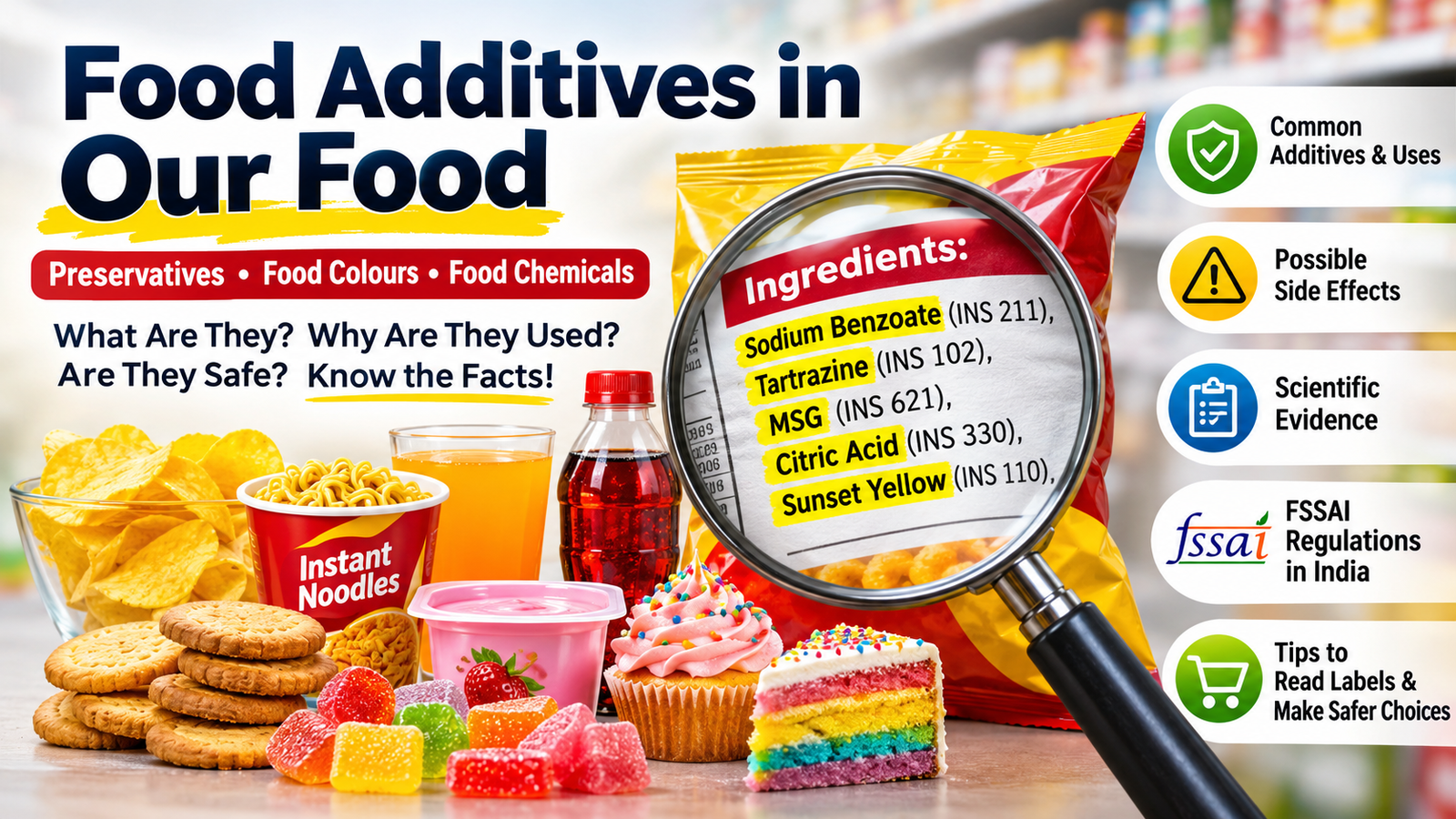
Have you ever checked the ingredients printed on a packet of biscuits, instant noodles, packaged juice, soft drinks, flavoured yoghurt or colorful sweets?
You may find unfamiliar names such as sodium benzoate, potassium sorbate, citric acid, tartrazine, sunset yellow, monosodium glutamate (MSG), sodium nitrite, butylated hydroxyanisole (BHA) or butylated hydroxytoluene (BHT).
For many consumers, these names create confusion. Some people believe that every chemical added to food is dangerous, while others assume that packaged foods are completely safe because they are commercially manufactured.
Neither assumption is scientifically correct.
Modern food processing frequently uses food additives to improve shelf life, prevent microbial growth, maintain texture, enhance flavour, control oxidation and improve appearance. Some additives also play an important role in preventing food spoilage and foodborne illnesses.
However, inappropriate use, excessive exposure, contamination, unauthorised chemicals and poor food manufacturing practices can create significant public health concerns.
In India, the consumption of packaged snacks, instant foods, bakery products, flavoured beverages, confectionery and ready-to-eat foods has become increasingly common. Consequently, understanding food preservatives, synthetic food colours and other chemical additives is an important part of nutritional awareness.
This article explores:
What food preservatives and additives are.
Why food manufacturers use chemicals in food.
Common preservatives found in Indian food products.
Artificial and natural food colouring agents.
Potential side effects and health concerns.
The scientific evidence behind food additive safety.
FSSAI regulations in India.
How consumers can identify and reduce unnecessary exposure.
The objective is not to create fear about food additives but to help consumers make informed food choices based on scientific evidence.
1. What Are Food Additives?
Food additives are substances intentionally added to food during manufacturing, processing, preparation, packaging, transportation or storage for a specific technological purpose.
According to the World Health Organization (WHO), food additives are used to improve food safety, increase storage life and modify the sensory characteristics of food, including taste, colour, smell and texture.
Food additives may originate from:
Natural plant sources.
Animal sources.
Minerals.
Microorganisms.
Chemically synthesised substances.
Importantly, the word chemical does not automatically mean harmful. Water, salt, vitamin C and citric acid are also chemicals.
The safety of a food additive depends on its chemical properties, purity, quantity, frequency of consumption, exposure from different food sources and the individual's sensitivity.
The WHO explains that food additives undergo safety assessments by relevant national and international authorities before approval for their intended uses.
Reference: WHO - Food Additives (2023).
https://www.who.int/news-room/fact-sheets/detail/food-additives
1.1 Why Are Chemicals Added to Food?
Food manufacturers use different additives for different purposes.
| Purpose | Why it is used | Examples |
|---|---|---|
| Preservation | Prevents microbial spoilage | Sodium benzoate, potassium sorbate |
| Colouring | Improves or restores appearance | Tartrazine, curcumin |
| Antioxidant | Slows oxidation and rancidity | Ascorbic acid, tocopherols |
| Acidity regulation | Controls acidity and pH | Citric acid, sodium citrate |
| Flavour enhancement | Improves flavour perception | MSG |
| Emulsification | Helps oil and water mix | Lecithin |
| Stabilisation | Maintains consistency | Pectin, xanthan gum |
| Sweetening | Provides sweetness | Sucralose, aspartame |
| Anti-caking | Prevents powder from forming lumps | Silicon dioxide |
Not all these additives perform the same function, and they should not be treated as a single category of harmful substances.
2. What Are Food Preservatives?
Food preservatives are substances added to food to delay spoilage and maintain quality during storage.
Food can deteriorate because of:
Bacterial growth.
Yeast and mould growth.
Enzymatic activity.
Oxidation.
Moisture exposure.
Temperature fluctuations.
Chemical reactions.
Preservatives help control some of these processes.
For example, preservatives can help prevent mould growth in selected bakery products and inhibit microbial growth in certain beverages, sauces and packaged foods.
Preservation is particularly important in India because food products may travel long distances between manufacturing facilities, warehouses, distributors and retail shops.
However, preservatives do not make food permanently safe. They cannot compensate for poor hygiene, improper refrigeration, damaged packaging or expired products.
2.1 Common Food Preservatives Used in India
The following are examples of preservatives used in various food categories. Actual permitted uses and maximum levels depend on the relevant FSSAI food category and applicable regulations.
A. Sodium Benzoate (INS 211)
https://en.wikipedia.org/wiki/Sodium_benzoate
Sodium benzoate is a widely used chemical preservative. It is the sodium salt of benzoic acid.
Common applications:
Carbonated beverages.
Fruit-based drinks.
Squashes and syrups.
Sauces.
Pickles and selected acidic food products.
How does it work?
Sodium benzoate is particularly effective in acidic food environments. It helps inhibit the growth of certain yeasts, moulds and bacteria.
Possible side effects and concerns:
Some sensitive individuals may experience intolerance reactions.
It may contribute to exposure above the acceptable daily intake when several products containing benzoates are consumed regularly.
Its interaction with vitamin C under certain conditions can lead to benzene formation, particularly in some beverages. The amount formed depends on formulation, storage, temperature and other factors.
Benzene is a recognised human carcinogen. However, this does not mean that every beverage containing sodium benzoate contains dangerous levels of benzene.
Research perspective:
The European Food Safety Authority (EFSA) re-evaluated benzoic acid and its salts in 2016. Its assessment identified low toxicity in the available toxicological studies and did not identify genotoxic or carcinogenic concerns for the additives themselves. However, estimated exposure could exceed the established acceptable daily intake in some children consuming flavoured beverages regularly.
WHO/JECFA subsequently established a group acceptable daily intake of 0-20 mg/kg body weight per day in its 2021 evaluation.
References:
EFSA, 2016. https://doi.org/10.2903/j.efsa.2016.4433
WHO/JECFA Benzoic Acid Database: https://apps.who.int/food-additives-contaminants-jecfa-database/
B. Potassium Sorbate (INS 202)
Potassium sorbate is a preservative used to prevent the growth of moulds and yeasts.
Common applications:
Cheese products.
Bakery products.
Fruit preparations.
Sauces.
Selected beverages.
Processed food products.
Possible side effects:
Most people tolerate permitted food-use levels. However, sensitive individuals may experience:
Skin irritation or contact reactions.
Rare hypersensitivity reactions.
Irritation in susceptible individuals.
Potassium sorbate should not be described as a proven human carcinogen at permitted food-use levels.
WHO/JECFA has established an acceptable daily intake of 0-25 mg/kg body weight per day, expressed as sorbic acid, for sorbic acid and its salts.
Reference: WHO/JECFA, Sorbic Acid evaluation.
C. Sodium Nitrite (INS 250)
Sodium nitrite is used in selected cured meat products.
Common applications:
Processed meat.
Sausages.
Cured meat products.
Certain preserved meat preparations.
Why is it used?
It helps control dangerous microorganisms, contributes to the characteristic colour and flavour of cured meat, and prevents certain forms of microbial spoilage.
One important function is controlling Clostridium botulinum, the bacterium associated with potentially life-threatening botulism.
Potential health concerns:
Under certain conditions, nitrite can participate in reactions that form N-nitroso compounds, some of which are carcinogenic.
Research has investigated relationships between processed meat consumption, nitrites, nitrosamines and colorectal cancer.
However, the risk should not be attributed to sodium nitrite alone without considering the overall food matrix, processing conditions and dietary pattern.
The International Agency for Research on Cancer (IARC) classified processed meat as carcinogenic to humans (Group 1) in 2015. This classification relates to processed meat consumption, not a conclusion that every permitted use of nitrite independently causes cancer.
Practical recommendation for Indian consumers:
Limit frequent consumption of sausages, salami, bacon, ham and other processed meats. Choose fresh pulses, beans, eggs, fish or other minimally processed protein sources more often.
Reference: IARC Monographs, Volume 114, 2015.
D. Sulphur Dioxide and Sulphites (INS 220-228)
Sulphur dioxide and sulphites are preservatives used to control oxidation, browning and microbial spoilage.
Common applications:
Dried fruits.
Selected fruit products.
Fruit juices.
Certain beverages.
Processed foods.
Potential side effects:
Sulphites can trigger sensitivity reactions in susceptible people.
Possible symptoms include:
Wheezing.
Breathing difficulty.
Skin reactions.
Flushing.
Gastrointestinal discomfort.
People with asthma are particularly important to consider because some sulphite-sensitive individuals can experience bronchospasm.
Anyone with a known sulphite sensitivity should check food labels and seek medical advice.
E. Calcium Propionate (INS 282)
Calcium propionate is used mainly to inhibit mould growth in bakery products.
Common applications:
Bread.
Bakery products.
Selected packaged flour-based products.
Potential side effects:
Calcium propionate is considered acceptable for specified food uses under relevant regulations. However, individual tolerance may vary.
Some research has investigated possible metabolic or behavioural effects of propionate exposure, but the available evidence does not establish that permitted food-use quantities cause these effects in humans.
Consumers should avoid treating preliminary laboratory findings as proof of clinical harm.
F. Acetic Acid (INS 260)
Acetic acid is the main acid present in vinegar.
It is used as an acidity regulator and can contribute to food preservation.
Common applications:
Pickles.
Sauces.
Chutneys.
Condiments.
Selected processed foods.
Acetic acid is not automatically harmful because it is chemically manufactured or added during processing. Its concentration and intended application matter.
G. Nisin (INS 234)
Nisin is an antimicrobial peptide produced by certain strains of Lactococcus lactis.
It is used in selected food categories to inhibit certain bacteria.
Applications may include:
Selected dairy products.
Processed cheese.
Certain heat-treated foods.
It is an example of a preservative derived from microbial fermentation rather than a conventional synthetic chemical.
3. What Are Food Colours?
Food colours are additives used to improve, restore or standardise the appearance of food.
Colour has a significant influence on consumer perception.
For example:
Bright orange sweets may appear more attractive.
Red sauces may appear richer.
Yellow snacks may look more appealing.
Brightly coloured beverages may appear more flavourful.
However, colour does not necessarily indicate nutritional quality, freshness or ingredient concentration.
A bright orange drink does not automatically contain more real orange juice than a pale one.
Food colours are broadly divided into two categories:
Natural food colours.
Synthetic food colours.
3.1 Natural Food Colours
Natural food colours are obtained from natural sources such as plants, fruits, vegetables, spices and microorganisms.
Examples include:
| Colour | Source | Main pigment |
|---|---|---|
| Yellow | Turmeric | Curcumin |
| Red | Beetroot | Betalains |
| Orange | Carrots | Carotenoids |
| Green | Green leafy vegetables | Chlorophyll |
| Purple | Black grapes | Anthocyanins |
| Red-orange | Paprika | Capsanthin |
| Yellow-orange | Saffron | Crocin |
Natural does not automatically mean risk-free. Natural extracts can also cause allergies, intolerance or other adverse reactions in some individuals.
Their safety depends on the source, extraction process, purity, concentration and intended use.
3.2 Synthetic Food Colours
Synthetic food colours are manufactured through controlled chemical processes.
They are often used because they offer:
Strong colour intensity.
Better colour consistency.
Longer colour stability.
Lower cost.
Predictable manufacturing performance.
India permits specific synthetic colours for use in certain food categories subject to applicable restrictions.
According to FSSAI's food additives manual, the eight traditional permitted synthetic colours include:
| Colour name | INS number | Typical shade |
|---|---|---|
| Carmoisine | 122 | Red |
| Ponceau 4R | 124 | Red |
| Erythrosine | 127 | Pink/red |
| Tartrazine | 102 | Yellow |
| Sunset Yellow FCF | 110 | Orange-yellow |
| Brilliant Blue FCF | 133 | Blue |
| Indigo Carmine | 132 | Blue |
| Fast Green FCF | 143 | Green |
Important: Permission does not mean that every colour can be added to every food. FSSAI specifies permitted food categories, conditions and applicable limits.
Reference: FSSAI, Manual of Food Additives, 2016.
3.3 Artificial Food Colours Commonly Found in Food Products
A. Tartrazine (INS 102)
Tartrazine is a synthetic yellow food colour.
Possible applications:
Confectionery.
Selected beverages.
Desserts.
Processed foods.
Certain snack products.
Potential side effects:
Some sensitive individuals may experience:
Urticaria or hives.
Skin irritation.
Intolerance reactions.
Asthma-related symptoms in susceptible individuals.
There has also been research into possible behavioural effects of synthetic food colours in children.
A 2009 EFSA assessment concluded that the available evidence did not justify changing the acceptable daily intake for tartrazine, but recognised that sensitive individuals may experience intolerance reactions even at exposure levels within that intake.
Reference: EFSA Journal, 2009; 7(11):1331.
B. Sunset Yellow FCF (INS 110)
Sunset Yellow is a synthetic orange-yellow colour.
Potential applications:
Confectionery.
Beverages.
Desserts.
Selected processed foods.
Potential concerns:
Some studies have investigated associations between synthetic food colours and behavioural changes in children.
EFSA's 2009 evaluation revised the acceptable daily intake for Sunset Yellow to a temporary value of 1 mg/kg body weight per day, based on concerns identified in the toxicological evidence available at that time.
This assessment should not be interpreted as proof that ordinary exposure causes reproductive problems in humans.
Reference: EFSA Journal, 2009; 7(11):1330.
C. Carmoisine (INS 122)
Carmoisine is a synthetic red food colour.
Potential applications:
Sweets.
Confectionery.
Selected beverages.
Desserts.
Potential concerns include intolerance or hypersensitivity reactions in susceptible individuals. Evidence does not establish that normal permitted exposure causes cancer in humans.
D. Ponceau 4R (INS 124)
Ponceau 4R is a synthetic red colour.
It may be used in selected confectionery and processed food categories.
Potential concerns include sensitivity reactions in some people. Exposure should remain within the permitted food-category limits.
E. Erythrosine (INS 127)
Erythrosine is a synthetic red/pink food colour.
It has been used in selected food applications.
Its toxicological profile has been studied, and regulatory authorities have imposed restrictions or specific conditions depending on the jurisdiction.
Consumers should not assume that every red-coloured food contains erythrosine.
F. Brilliant Blue FCF (INS 133)
Brilliant Blue is a synthetic blue colouring agent.
Applications may include:
Confectionery.
Decorative food products.
Selected beverages.
Dessert preparations.
The principal consumer concern is unnecessary cumulative exposure from multiple brightly coloured processed products, rather than evidence that normal permitted quantities are inherently toxic.
G. Indigo Carmine (INS 132)
Indigo Carmine is a synthetic blue food colour.
It may be used in certain permitted food applications.
Like other synthetic colours, its use must follow applicable purity specifications and regulatory limits.
4. Illegal and Unauthorised Food Colours: A Serious Food Safety Concern in India
One of the most important distinctions in food safety is the difference between an approved food additive and an unauthorised industrial dye.
Some substances are not permitted as food colours but may be deliberately used to improve the appearance of food or conceal poor-quality ingredients.
This is food adulteration, not legitimate food processing.
Examples include:
4.1 Metanil Yellow
Metanil Yellow is an industrial dye that has been reported as an adulterant in food products.
It must not be confused with the permitted food colour tartrazine.
It has been associated with adulteration concerns involving:
Turmeric powder.
Pulses.
Yellow-coloured food preparations.
Certain sweets.
Health concerns:
Toxicological studies have raised concerns about potential neurological, hepatic and other toxic effects following exposure.
However, the extent of human harm depends on the amount, duration and actual exposure. Animal toxicology results should not be directly presented as proven human clinical outcomes.
Metanil Yellow is not an authorised substitute for permitted food colours.
4.2 Rhodamine B
Rhodamine B is a synthetic industrial dye.
It has been reported in adulteration concerns involving:
Chilli powder.
Certain sweets.
Decorative food products.
Other brightly coloured products.
It is not a permitted food colouring agent.
Experimental research has raised concerns about toxicity, including potential cellular and organ effects.
Consumers should avoid foods containing unauthorised industrial dyes.
4.3 Sudan Dyes
Sudan dyes are industrial colouring agents.
They are used in certain industrial applications but are not authorised for colouring food.
Food adulteration concerns have included chilli powder and other spice products.
Some Sudan dyes have genotoxic and carcinogenic properties in experimental studies.
Their presence in food is a serious safety concern.
4.4 Auramine O
Auramine O is an industrial dye that has been associated with food adulteration.
It is not a permitted food colour.
Its toxicological properties make its presence in food unacceptable.
Remember: The absence of an additive name on a food label does not prove that the food is free from adulteration. Laboratory testing is needed to identify unauthorised substances reliably.
Reference: FSSAI, Manual of Food Additives, 2016.
5. Other Food Chemicals and Additives Used in Packaged Foods
Preservatives and colours are only two groups of food additives.
Several other substances are used to maintain the taste, consistency, texture and stability of packaged foods.
Understanding their functions helps consumers avoid unnecessary fear and identify additives that may require individual consideration.
5.1 Monosodium Glutamate (MSG - INS 621)
MSG is a flavour enhancer that provides umami, a savoury taste.
Common applications:
Instant noodles.
Seasoning mixes.
Soups.
Savoury snacks.
Restaurant-style sauces.
Processed foods.
Potential side effects:
Some individuals report symptoms after consuming large quantities of MSG, such as:
Headache.
Flushing.
Tingling sensations.
Temporary discomfort.
However, scientific evidence has not established that MSG causes these symptoms consistently in the general population when consumed at normal food-use levels.
MSG also contains sodium, which should be considered by individuals who need to limit sodium intake.
Nutrition advice: Focus on total sodium consumption rather than blaming MSG alone for the sodium content of an entire packaged product.
5.2 Aspartame (INS 951)
Aspartame is a low-calorie artificial sweetener.
It is used in selected:
Sugar-free beverages.
Chewing gums.
Tabletop sweeteners.
Low-calorie food products.
In 2023, IARC classified aspartame as Group 2B, possibly carcinogenic to humans, based on limited evidence.
At the same time, JECFA maintained its acceptable daily intake of 0â40 mg/kg body weight per day.
These are different types of assessments: IARC evaluates carcinogenic hazard, while JECFA evaluates risk in relation to dietary exposure.
People with phenylketonuria (PKU) must avoid aspartame because it contains phenylalanine.
Reference: WHO, 2023; IARC Monographs, Volume 134.
5.3 Sucralose (INS 955)
Sucralose is a high-intensity artificial sweetener.
It is used in:
Sugar-free beverages.
Sweetener tablets.
Selected desserts.
Low-calorie food products.
It has been assessed by food safety authorities for specified uses.
However, being sugar-free does not automatically make a food nutritionally healthy.
Consumers should also consider the overall ingredients, sweetness, portion size and dietary pattern.
5.4 Butylated Hydroxyanisole (BHA - INS 320)
BHA is an antioxidant used to slow oxidation and prevent rancidity in certain fat-containing foods.
Potential applications include:
Fat-containing processed foods.
Selected snacks.
Certain food preparations.
IARC has classified BHA as possibly carcinogenic to humans (Group 2B). This is a hazard classification based on the evidence available to the agency, not a statement that normal permitted food exposure has been demonstrated to cause cancer in consumers.
The actual risk assessment requires consideration of exposure and dose.
5.5 Butylated Hydroxytoluene (BHT - INS 321)
BHT is another synthetic antioxidant used to protect food fats from oxidation.
It may be used in selected processed food categories.
Animal studies have investigated effects at high doses, but these findings do not automatically establish similar effects at permitted human dietary exposures.
The important consideration is compliance with authorised food-use conditions.
5.6 Silicon Dioxide (INS 551)
Silicon dioxide is an anti-caking agent.
It helps prevent powdered food products from forming lumps.
Possible applications include:
Spice mixes.
Seasoning powders.
Powdered food preparations.
Selected dry ingredients.
It is used for a technological purpose and should not be confused with industrial crystalline silica dust, which presents a different occupational inhalation hazard.
5.7 Citric Acid (INS 330)
Citric acid is widely used as an acidity regulator and flavouring ingredient.
It occurs naturally in citrus fruits but is also commercially manufactured.
Applications:
Soft drinks.
Packaged juices.
Candies.
Sauces.
Pickles.
Processed foods.
Citric acid is generally well tolerated at food-use levels. Highly acidic products may nevertheless contribute to dental enamel erosion when consumed frequently.
5.8 Carrageenan (INS 407)
Carrageenan is a seaweed-derived thickener and stabiliser.
It may be used in:
Dairy alternatives.
Desserts.
Selected dairy products.
Processed foods.
There has been scientific debate about carrageenan, particularly concerning differences between food-grade carrageenan and degraded carrageenan (poligeenan).
These substances should not be treated as interchangeable.
Research on degraded carrageenan does not establish that authorised food-grade carrageenan causes inflammatory bowel disease in humans.
5.9 Emulsifiers and Stabilizers
Common examples include:
Lecithin (INS 322).
Pectin (INS 440).
Xanthan gum (INS 415).
Guar gum (INS 412).
Mono- and diglycerides of fatty acids (INS 471).
They help maintain the consistency and stability of food.
Some experimental studies have investigated how certain emulsifiers may influence gut microbiota or intestinal health. However, findings from laboratory and animal studies cannot be treated as definitive proof of harm in humans at normal permitted intake levels.
6. Health Effects of Food Preservatives and Artificial Colours
The health effects of food additives cannot be explained by one universal statement.
Different additives have different biological properties.
Some are associated with allergic or intolerance reactions. Others may create concerns under specific chemical conditions or at excessive exposure levels.
The following are important areas of scientific investigation.
6.1 Allergic and Hypersensitivity Reactions
Certain food additives can trigger adverse reactions in susceptible individuals.
Examples include:
Sulphites.
Some synthetic food colours.
Certain flavouring ingredients.
Possible symptoms include:
Skin rashes.
Hives.
Itching.
Wheezing.
Gastrointestinal discomfort.
Swelling.
True food additive allergies are relatively uncommon compared with other food-related adverse reactions. Some reactions are non-allergic intolerances.
Anyone experiencing breathing difficulty or swelling after eating should seek urgent medical attention.
6.2 Effects on Children and Behaviour
Children may consume multiple processed products containing synthetic colours, including:
Brightly coloured candies.
Ice creams.
Sweetened beverages.
Packaged desserts.
Coloured confectionery.
Some studies have investigated whether synthetic food colours are associated with changes in activity levels, attention or behaviour in children.
A 2022 review published in Environmental Health examined 27 clinical trials involving synthetic food dyes in children. The review reported evidence of an association in several challenge studies.
However, study design, doses, combinations of dyes and individual susceptibility vary. The evidence does not mean that every child consuming coloured food will develop attention or behavioural problems.
Parents can take a sensible approach by reducing frequent consumption of highly coloured confectionery and encouraging a varied diet based on minimally processed foods.
Research reference:
Potential impacts of synthetic food dyes on activity and attention in children: A review of the human and animal evidence. Environmental Health, 2022.
https://pmc.ncbi.nlm.nih.gov/articles/PMC9052604/
6.3 Cancer-Related Concerns
Cancer-related concerns associated with food additives need careful interpretation.
Three different situations should be distinguished:
A chemical has demonstrated carcinogenic effects under certain experimental conditions.
A chemical may form a carcinogenic compound under specific food-processing or storage conditions.
A food or dietary pattern has been associated with cancer in human epidemiological studies.
These are not equivalent.
Examples:
Processed meat: IARC classified processed meat as carcinogenic to humans in 2015, based on sufficient evidence linking its consumption to colorectal cancer.
Aspartame: IARC classified it as possibly carcinogenic to humans in 2023, while JECFA retained its acceptable daily intake.
Benzoates: EFSA's 2016 assessment did not identify carcinogenic potential for benzoic acid and its salts in the available evidence.
Industrial dyes: Unauthorised substances such as certain Sudan dyes present a separate food adulteration concern.
Consumers should avoid drawing conclusions about all preservatives from one chemical's toxicological classification.
6.4 Liver and Kidney Health
The liver and kidneys play important roles in metabolising and eliminating substances from the body.
High-dose toxicological studies of certain chemicals have reported organ-related effects.
However, these findings must be interpreted according to:
Chemical identity.
Dose.
Exposure duration.
Species studied.
Human exposure levels.
Overall toxicological evidence.
It would be scientifically inaccurate to claim that all food preservatives damage the liver or kidneys.
The more practical concern is exposure to unauthorised chemicals, contaminants or excessive additive quantities.
6.5 Gut Microbiome and Digestive Health
The gut microbiome consists of trillions of microorganisms living in the digestive tract.
Certain experimental studies have examined the possible effects of selected food additives, including emulsifiers, on gut microbial composition and intestinal function.
Some animal and laboratory studies have reported changes in gut microbiota following exposure to specific additives.
However, human research is still developing.
There is not enough evidence to conclude that all emulsifiers, preservatives or food colours cause gut inflammation or digestive disorders in humans.
A dietary pattern rich in whole grains, vegetables, fruits, pulses and adequate fibre remains a more established strategy for supporting digestive health.
6.6 Oxidative Stress and Cellular Damage
Some chemicals have been investigated for their potential to influence oxidative stress and cellular processes.
High-dose animal or cell-culture studies may identify potential hazards, but these results cannot automatically be applied to people consuming foods containing permitted additive concentrations.
Food safety evaluations consider toxicological evidence and exposure estimates to establish acceptable conditions of use.
7. Acceptable Daily Intake (ADI): How Much Is Safe?
One of the most important concepts in food additive safety is Acceptable Daily Intake (ADI).
ADI is an estimate of the amount of a substance that can be consumed daily over a lifetime without appreciable health risk, based on the available toxicological evidence.
It is generally expressed as:
Milligrams of substance per kilogram of body weight per day (mg/kg bw/day).
For example, if an additive has an ADI of 5 mg/kg body weight per day:
For a person weighing 60 kg:
5 * 60 = 300 mg per day.
This is an illustrative calculation, not a recommendation to consume that quantity.
ADI is not the same as the maximum amount that a manufacturer can add to a particular food.
The legal maximum permitted concentration may be different for different food categories.
Also, ADI calculations should consider exposure from all relevant dietary sources.
Why is ADI important?
It helps regulators:
Evaluate long-term exposure.
Assess safety margins.
Establish conditions of use.
Consider vulnerable populations.
Compare estimated intake with toxicological reference values.
A temporary or revised ADI does not automatically mean an additive has been banned. It may reflect a need for further evidence or a more cautious assessment.
8. FSSAI Regulations on Food Preservatives and Colours in India
In India, food additives are regulated under the Food Safety and Standards Act, 2006 and relevant regulations notified by the Food Safety and Standards Authority of India (FSSAI).
An important regulatory framework is the:
Food Safety and Standards (Food Products Standards and Food Additives) Regulations, 2011.
These regulations define permitted additives and the conditions under which they can be used.
FSSAI maintains food-category-specific provisions covering:
Preservatives.
Colours.
Antioxidants.
Sweeteners.
Emulsifiers.
Stabilizers.
Acidity regulators.
Flavour enhancers.
Other technological additives.
8.1 Are All Food Chemicals Allowed in India?
No.
Food businesses cannot simply add any chemical to a food product.
Only permitted additives may be used in the relevant food categories, subject to the applicable conditions, specifications and maximum levels.
Some additives may be permitted in one product but not in another.
For example, an additive authorised for a particular beverage category is not automatically permitted in every food product.
8.2 Food Colour Labelling
Food labels must comply with applicable FSSAI labelling requirements.
Declarations relating to added colours may include:
CONTAINS PERMITTED NATURAL COLOUR(S)
CONTAINS PERMITTED SYNTHETIC FOOD COLOUR(S)
CONTAINS PERMITTED NATURAL AND SYNTHETIC FOOD COLOUR(S)
Specific additive names or recognised identification numbers may also be required under applicable provisions.
Consumers should read the ingredients list rather than relying only on the front-of-pack marketing claims.
8.3 FSSAI and Food Adulteration
FSSAI regulates food quality and safety and has established standards for contaminants, toxins, residues and food additives.
Its official resources include food testing manuals that help identify unauthorised colouring substances.
Consumers can consult:
FSSAI official website: https://www.fssai.gov.in/
Food product standards: https://fssai.gov.in/standards/product-standards
Food additives regulations: https://fssai.gov.in/food-law/regulations
FSSAI food additives manual: https://fssai.gov.in/
Important: Regulatory compendiums are useful references, but the original Gazette notifications and subsequent amendments prevail where there is a difference. Businesses should verify the latest applicable provisions before manufacturing or selling food.
9. Indian Foods Where Consumers May Encounter Preservatives and Colors
Food additives may appear in many everyday products sold in Indian markets.
The following examples describe possible applications, not a claim that every product in these categories contains preservatives or artificial colors.
| Food category | Possible additives | Purpose |
|---|---|---|
| Packaged fruit drinks | Benzoates, permitted colors, acidity regulators | Preservation, color and acidity |
| Soft drinks | Acidity regulators, colors, sweeteners | Taste and appearance |
| Bread | Calcium propionate | Mold control |
| Packaged cakes | Preservatives, emulsifiers | Shelf life and texture |
| Sauces | Benzoates, sorbates, acidity regulators | Preservation and stability |
| Pickles | Acetic acid, permitted preservatives | Acidity and preservation |
| Instant noodles | Flavor enhancers, antioxidants, acidity regulators | Taste and product stability |
| Candies | Permitted synthetic colors, acidity regulators | Appearance and taste |
| Ice creams | Colors, stabilizers, emulsifiers | Appearance and texture |
| Processed meat | Nitrites, other permitted additives | Preservation and curing |
| Packaged spice mixes | Anti-caking agents | Preventing lumps |
9.1 Packaged Fruit Drinks
Packaged fruit drinks may contain acidity regulators, preservatives and added colors, depending on the product formulation.
Consumers should check:
Actual fruit juice percentage.
Added sugar.
Total carbohydrate.
Preservative declaration.
Color declaration.
Serving size.
A fruit-flavored beverage should not automatically be treated as equivalent to whole fruit.
9.2 Indian Sweets and Confectionery
Some sweets and confectionery products use permitted colors to improve appearance.
Particular caution is needed with extremely bright, unlabeled or suspiciously cultured products from unverified sources.
The concern is not simply that the food looks colorful. The concern is whether the color is authorized, food-grade and used according to applicable standards.
9.3 Packaged Bakery Products
Commercial bread, cakes and other bakery products may contain preservatives to slow mold growth.
Consumers should consider the overall product:
Refined flour content.
Added sugar.
Saturated fat.
Sodium.
Fiber content.
Portion size.
Shelf life.
A product's nutritional quality cannot be judged solely by whether it contains a preservative.
9.4 Instant Noodles and Savoury Snacks
These products may contain flavor enhancers, stabilizers, acidity regulators and antioxidants.
The overall nutritional concern may also involve high sodium, refined starch, excess calories and low dietary fiber.
Occasional consumption within an otherwise balanced diet is different from relying on such products as daily staple foods.
10. Natural vs Synthetic Food Colors: Which Is Better?
Consumers often believe that natural food colors are always safer than synthetic colors.
This is an oversimplification.
Both natural and synthetic colors must meet appropriate food safety and purity standards.
| Feature | Natural colors | Synthetic colors |
|---|---|---|
| Source | Plants, minerals or microorganisms | Controlled chemical synthesis |
| Color stability | Depends on the source and processing | Often more stable |
| Color intensity | Can vary | Often highly intense |
| Cost | May be higher | Often lower |
| Manufacturing consistency | May vary by source | Usually more consistent |
| Safety | Depends on purity and exposure | Depends on purity and exposure |
| Allergic reactions | Possible | Possible |
For example, turmeric contains curcumin, a naturally occurring yellow pigment. Tartrazine is a synthetic yellow color.
Both have specific food applications and regulatory conditions.
Natural origin alone does not guarantee safety, just as synthetic origin alone does not establish toxicity.
The most important factors are purity, intended use, exposure and scientific safety evaluation.
11. How to Reduce Unnecessary Exposure to Food Additives
Consumers do not need to eliminate every packaged food product.
A more practical approach is to reduce frequent consumption of highly processed foods and choose a wider variety of minimally processed foods.
11.1 Read the Ingredients List
Before buying packaged food, check:
Ingredient names.
INS numbers.
Preservatives.
Added colors.
Added sweeteners.
Sodium content.
Added sugar.
Expiry date.
Remember that ingredients are generally listed in descending order by weight, subject to applicable labelling rules.
11.2 Reduce Brightly Colored Confectionery
Children often consume multiple colored food products in a single day.
Try replacing frequent consumption of brightly colored sweets with:
Fresh fruit.
Homemade fruit yoghurt.
Seasonal fruit bowls.
Roasted chana.
Homemade snacks.
Unsweetened milk or curd.
11.3 Prefer Whole Fruits Over Fruit-Flavored Drinks
Whole fruits provide fiber and a range of nutrients.
For example:
Orange instead of orange-flavored drinks.
Watermelon instead of sugary watermelon beverages.
Guava instead of guava-flavored candy.
Mango instead of artificially flavored mango drinks.
11.4 Prepare Homemade Food When Practical
Home preparation gives consumers more control over ingredients.
Examples include:
Homemade pickles.
Fresh chutneys.
Homemade sauces.
Vegetable snacks.
Fresh fruit preparations.
Traditional Indian meals.
However, homemade foods also require safe handling, clean utensils, suitable storage and adequate cooking.
Homemade does not automatically mean microbiologically safe.
11.5 Avoid Suspiciously Colored Foods
Avoid purchasing foods with:
Unnaturally intense colors.
No reliable ingredient or manufacturer information.
Damaged or tampered packaging.
Missing expiry information.
Poor storage conditions.
Unverified food-grade coloring claims.
Extremely bright colors alone do not prove adulteration, but suspicious products should be avoided.
11.6 Choose Reliable Food Manufacturers
Check the manufacturer details and applicable FSSAI license or registration information.
An FSSAI number is not a guarantee that every batch is free from defects, but it provides an important regulatory identification point.
Consumers can report suspected adulteration or unsafe products through official food safety channels.
12. Who Should Be More Careful About Food Additives?
Although approved additives are assessed for specified uses, certain groups may need additional attention.
Children
Children have lower body weights and may consume a relatively high quantity of certain foods compared with adults.
Their frequent consumption of colorful confectionery and sweetened drinks may increase exposure to selected additives.
People with Asthma
Some individuals with asthma may be sensitive to sulphites.
They should discuss relevant food triggers with their healthcare provider.
People with Known Food Additive Sensitivities
Individuals who repeatedly experience reactions after consuming particular products may benefit from keeping a food and symptom record and discussing it with a qualified healthcare professional.
People with Hypertension
Individuals managing blood pressure should pay attention to total sodium intake.
Some processed products contain substantial sodium from salt and other sodium-containing ingredients.
People with Phenylketonuria
Individuals with PKU must avoid aspartame because of its phenylalanine content.
13. Common Myths About Food Preservatives and Chemicals
Myth 1: All preservatives are harmful.
Fact: Approved preservatives have specific technological purposes and undergo safety evaluation. Some help prevent dangerous microbial contamination.
Myth 2: Natural food colors are always safe.
Fact: Natural substances can also cause adverse reactions or be contaminated. Safety depends on quality, purity and exposure.
Myth 3: Every E-number is dangerous.
Fact: Identification numbers are used to identify additives. An INS or E-number does not automatically indicate toxicity.
Myth 4: Packaged food without preservatives is always healthy.
Fact: A preservative-free product may still be high in sugar, salt, saturated fat or refined starch.
Myth 5: Artificial food colors always cause hyperactivity in children.
Fact: Research suggests that some synthetic colors may influence behavior in susceptible children, but the effect is not universal and the evidence must be interpreted carefully.
Myth 6: Preservatives prevent all food poisoning.
Fact: Preservatives can inhibit selected microorganisms, but they cannot replace hygiene, safe temperatures, proper cooking and correct storage.
Myth 7: If a chemical is permitted, unlimited consumption is safe.
Fact: Permission applies to specified food categories and use conditions. Total exposure and individual tolerance still matter.
14. What Does Scientific Research Tell Us?
Food additive safety is evaluated using several types of scientific evidence.
These include:
Laboratory studies.
Animal toxicology studies.
Human clinical trials.
Epidemiological studies.
Exposure assessments.
Long-term safety evaluations.
A single study rarely establishes the complete safety profile of an additive.
For example, an animal study using a very high dose may identify a possible hazard, but the same effect may not occur at ordinary human dietary exposure.
Similarly, the absence of a harmful effect in a short-term study does not necessarily establish long-term safety.
The most reliable approach is to consider the total body of evidence.
Important Research Findings
1. WHO, 2023 - Food Additives
WHO explains the role of food additives in food preservation, processing, safety and sensory characteristics. It also describes the role of international safety assessment.
2. EFSA, 2016 - Benzoates
EFSA evaluated benzoic acid and benzoate salts and identified potential exposure concerns in some high-consuming children, while concluding that the additives did not raise genotoxicity or carcinogenicity concerns based on the available evidence.
3. EFSA, 2009 - Tartrazine
EFSA maintained the acceptable daily intake of 7.5 mg/kg body weight per day while acknowledging possible intolerance reactions in sensitive individuals.
4. EFSA, 2009 - Sunset Yellow
EFSA reduced the temporary acceptable daily intake to 1 mg/kg body weight per day following its assessment of the available toxicological evidence.
5. Synthetic Food Dyes and Child Behavior, 2022
A review in Environmental Health examined human and animal evidence regarding synthetic food dyes and activity or attention in children. It reported evidence supporting an association in several clinical challenge studies while highlighting the need for further research.
6. IARC, 2015 - Processed Meat
IARC classified processed meat as carcinogenic to humans, based on sufficient evidence of a causal relationship with colorectal cancer.
7. WHO/JECFA, 2023 - Aspartame
JECFA maintained the acceptable daily intake for aspartame at 0â40 mg/kg body weight per day, while IARC classified aspartame as possibly carcinogenic to humans.
These assessments illustrate why food safety must be discussed chemical by chemical rather than by treating all additives as one group.
15. Practical Food Safety Checklist for Indian Consumers
Before purchasing packaged food, follow this simple checklist.
Check the FSSAI license or registration information.
Read the ingredient list.
Look for declared preservatives and food colors.
Check added sugar and sodium.
Check the manufacturing and expiry dates.
Avoid damaged or tampered packaging.
Follow storage instructions.
Avoid unlabeled food products from unreliable sources.
Reduce frequent consumption of highly processed snacks.
Prefer whole fruits, vegetables, pulses and fresh meals.
16. Frequently Asked Questions (FAQs)
1. Are food preservatives harmful to human health?
Not necessarily. Approved preservatives are evaluated for specific uses and permitted quantities. However, excessive exposure, misuse, contamination or individual sensitivity may create health concerns.
2. Which preservatives are commonly used in Indian packaged foods?
Examples include sodium benzoate, potassium sorbate, calcium propionate, Sulphur dioxide, sorbates and selected other authorized preservatives. The actual additives depend on the product category.
3. Is sodium benzoate safe?
Sodium benzoate has undergone regulatory safety assessments and is permitted in specified food applications subject to limits. Exposure from multiple products and individual sensitivity should still be considered.
4. Is MSG harmful?
MSG is a flavor enhancer. Scientific evidence does not establish consistent adverse effects in the general population at ordinary permitted food-use levels. Some individuals report symptoms after consuming large amounts.
5. Which artificial food colors are permitted in India?
The eight traditional synthetic food colors listed in FSSAI's food additives manual are Carmoisine, Ponceau 4R, Erythrosine, Tartrazine, Sunset Yellow FCF, Brilliant Blue FCF, Indigo Carmine and Fast Green FCF. Their use is restricted to applicable food categories and conditions.
6. Is Tartrazine dangerous?
Tartrazine is an approved synthetic food colour for specified applications. Some sensitive individuals may experience intolerance reactions. Its exposure should remain within applicable safety and regulatory limits.
7. Can food colours affect children's behaviour?
Some clinical research suggests that certain synthetic food colours may affect activity or attention in susceptible children. The evidence does not establish a universal effect in every child.
8. Is natural food colouring better than artificial colouring?
Natural colours may be preferable in some formulations, but natural origin alone does not guarantee safety. Both types must meet food safety and quality requirements.
9. Does packaged juice contain preservatives?
Some packaged beverages contain preservatives, while others use heat treatment, aseptic packaging or other preservation methods. Always check the ingredient list.
10. Are preservatives necessary in food?
Not every food needs preservatives. However, in suitable food applications, preservatives can improve shelf life and reduce microbial spoilage risks.
11. What is the difference between food additives and food adulterants?
Food additives are intentionally used for authorised technological purposes under applicable regulations. Food adulterants include unauthorised or harmful substances used to compromise food quality or safety.
12. How can consumers identify harmful food colours?
It is difficult to reliably identify specific chemical dyes through appearance alone. Consumers should buy labelled products from reliable manufacturers and report suspicious foods for official laboratory testing.
Conclusion: Make Informed Food Choices, Not Fear-Based Decisions
Food preservatives, artificial colours and other food additives are an important part of modern food manufacturing.
They can improve food stability, maintain product quality, control microbial spoilage and make large-scale food distribution possible.
However, their use must be scientifically justified, properly regulated and limited to authorised food categories and concentrations.
The real food safety challenge is not simply the presence of a chemical name on a packet. It is the combination of the substance, its purity, quantity, cumulative exposure, food processing conditions and the consumer's individual susceptibility.
For Indian consumers, a balanced approach is the most practical solution:
Read food labels.
Prefer minimally processed foods.
Reduce frequent consumption of brightly coloured confectionery.
Choose whole fruits instead of sugary fruit-flavoured drinks.
Avoid unlabelled and suspicious food products.
Follow safe food storage practices.
Report suspected adulteration.
Stay informed about FSSAI standards.
Remember that a healthy diet is not defined by whether every ingredient is labelled natural or chemical-free. It is defined by overall dietary quality, food safety, variety, nutritional adequacy and moderation.
Choose food based on evidence, not fear.
References and Scientific Resources
The following sources provide regulatory information, scientific assessments and research evidence relevant to food additives and food safety.
World Health Organization (WHO). Food Additives. 16 November 2023.
https://www.who.int/news-room/fact-sheets/detail/food-additivesFood Safety and Standards Authority of India (FSSAI). Food Safety and Standards (Food Products Standards and Food Additives) Regulations, 2011 and subsequent amendments.
https://fssai.gov.in/food-law/regulationsFSSAI. Food Additives Manual, 2016.
https://fssai.gov.in/upload/uploadfiles/files/Manual_Food_Additives_25_05_2016%281%29.pdfFSSAI. Food Safety and Standards (Food Products Standards and Food Additives) Regulations - Compendium.
https://fssai.gov.in/food-law/regulations/compendium/food-products-standardsFSSAI. Food Safety and Standards (Labelling and Display) Regulations, 2020.
https://fssai.gov.in/food-law/regulationsEFSA Panel on Food Additives and Nutrient Sources Added to Food. Scientific Opinion on the re-evaluation of benzoic acid (E 210), sodium benzoate (E 211), potassium benzoate (E 212) and calcium benzoate (E 213). EFSA Journal. 2016;14(3):4433.
https://doi.org/10.2903/j.efsa.2016.4433EFSA Panel on Food Additives and Nutrient Sources Added to Food. Scientific Opinion on the re-evaluation of Tartrazine (E 102). EFSA Journal. 2009;7(11):1331.
https://doi.org/10.2903/j.efsa.2009.1331EFSA Panel on Food Additives and Nutrient Sources Added to Food. Scientific Opinion on the re-evaluation of Sunset Yellow FCF (E 110). EFSA Journal. 2009;7(11):1330.
https://doi.org/10.2903/j.efsa.2009.1330WHO/JECFA. Benzoic Acid - Food Additives Database.
https://apps.who.int/food-additives-contaminants-jecfa-database/WHO/JECFA. Sorbic Acid - Food Additives Database.
https://apps.who.int/food-additives-contaminants-jecfa-database/IARC. Red Meat and Processed Meat. IARC Monographs on the Evaluation of Carcinogenic Risks to Humans, Volume 114. 2015.
https://publications.iarc.who.int/564IARC/WHO. Aspartame hazard and risk assessment results released. 2023.
https://www.who.int/news/item/14-07-2023-aspartame-hazard-and-risk-assessment-results-releasedPotential impacts of synthetic food dyes on activity and attention in children: A review of the human and animal evidence. Environmental Health. 2022.
https://pmc.ncbi.nlm.nih.gov/articles/PMC9052604/EFSA. Re-evaluation of potassium nitrite (E 249) and sodium nitrite (E 250) as food additives. EFSA Journal. 2017.
https://doi.org/10.2903/j.efsa.2017.4786
Medical and Scientific Disclaimer
This article is intended for general nutrition education and public awareness. It does not replace individual medical advice, diagnosis or treatment. Research findings and regulatory assessments may change as new scientific evidence becomes available. Food additive permissions and limits should always be verified against the latest applicable FSSAI notifications and regulations.






💬 Comments (0)
Be respectful. Website links and phone numbers are not allowed.