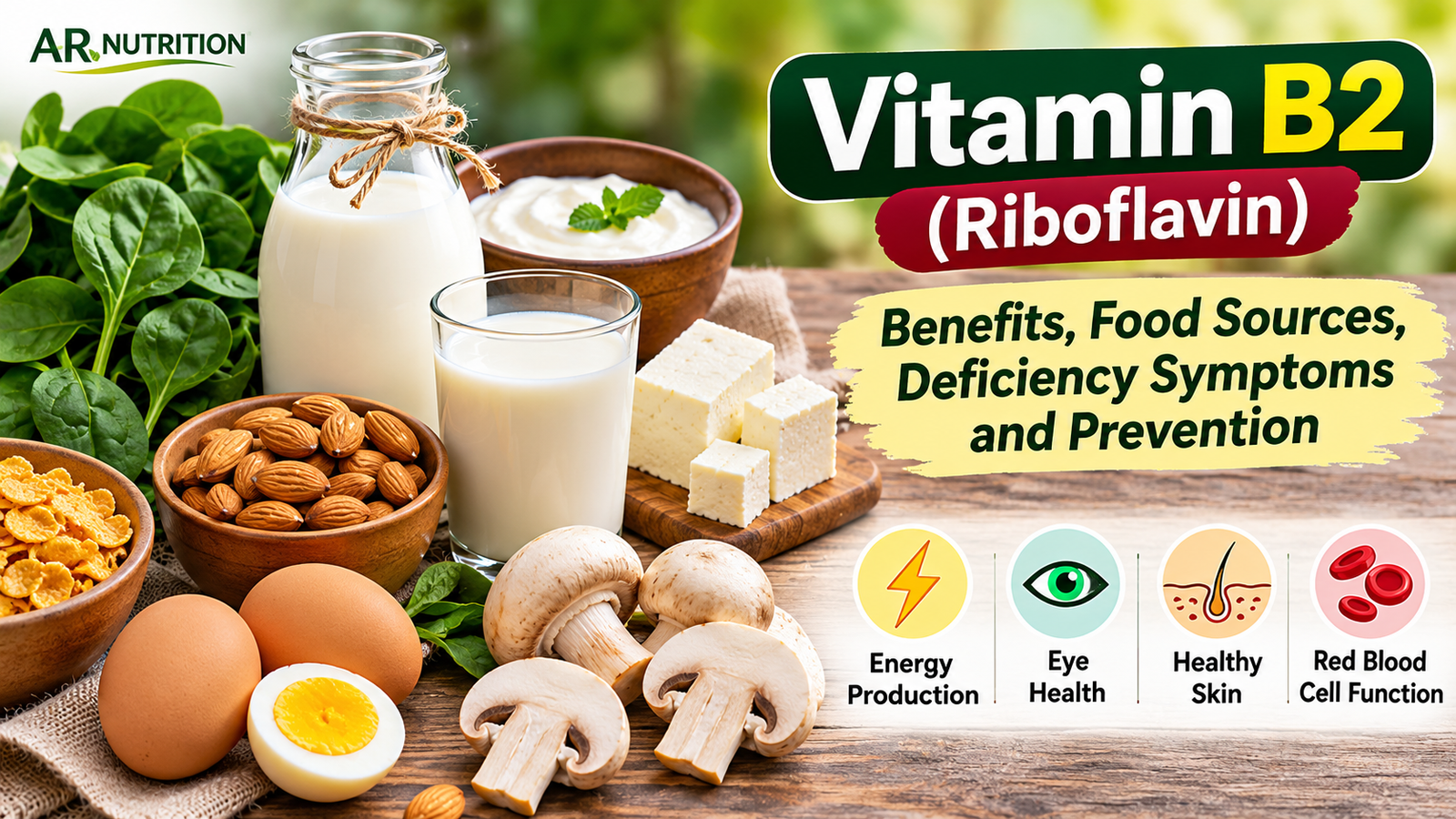
Vitamin B2 (riboflavin) is a water-soluble B-complex vitamin essential for energy metabolism and normal cellular function. It helps the body use carbohydrates, fats and proteins, supports healthy skin and eyes, and contributes to the functioning of several enzymes.
Good sources include milk, curd, eggs, mushrooms, almonds, green leafy vegetables, meat and fortified cereals. Inadequate intake may cause cracked lips, sores at the corners of the mouth, a sore throat, inflammation of the tongue and certain skin problems. Severe or prolonged deficiency can contribute to anemia.
A varied diet containing riboflavin-rich foods is generally the best way to maintain adequate intake.
1. What Is Vitamin B2 (Riboflavin)?
Vitamin B2 is an essential water-soluble vitamin belonging to the B-complex group. It is naturally present in various animal and plant foods and is also added to some fortified food products.
Riboflavin is required to produce two important coenzymes:
Flavin mononucleotide (FMN)
Flavin adenine dinucleotide (FAD)
These coenzymes participate in several metabolic reactions in the body. They help enzymes release energy from nutrients and support normal cellular activities.
Because Vitamin B2 is water-soluble, the body stores only limited amounts. Excess quantities are generally excreted through urine. Therefore, regular dietary intake is important.
One interesting feature of riboflavin is its sensitivity to light. Prolonged exposure to sunlight or ultraviolet light can reduce its content in food, particularly milk.
2. Health Benefits of Vitamin B2
Vitamin B2 contributes to several important physiological functions. Here are its major benefits.
2.1 Supports Energy Production
One of the most important functions of riboflavin is its involvement in energy metabolism.
When we eat carbohydrates, proteins and fats, the body breaks them down and processes them through different metabolic pathways. FAD and FMN participate in reactions that help convert these nutrients into usable energy.
Vitamin B2 does not directly provide calories or act as a stimulant. Instead, it supports the enzymes involved in normal energy production.
Adequate intake is therefore important for maintaining normal metabolic functions.
2.2 Supports Healthy Skin
Riboflavin contributes to normal cellular function and the maintenance of healthy tissues, including the skin.
Inadequate Vitamin B2 intake may be associated with skin changes, including dermatitis and inflammation around the nose and mouth.
However, skin problems can have several causes. Cracked or dry skin should not automatically be considered a sign of Vitamin B2 deficiency.
2.3 Helps Maintain Eye Health
Vitamin B2 is involved in normal cellular metabolism and antioxidant-related enzyme systems.
Severe or prolonged riboflavin deficiency has been associated with eye-related problems, including corneal changes and cataracts.
A balanced diet containing adequate riboflavin contributes to normal nutritional support for eye health. However, Vitamin B2 supplements should not be considered a proven treatment for existing cataracts or other eye diseases.
2.4 Supports Red Blood Cell Function
Riboflavin is involved in several metabolic processes associated with normal red blood cell production and iron metabolism.
Severe or prolonged deficiency may contribute to anemia, although this is not the only possible cause of low hemoglobin.
Iron deficiency, Vitamin B12 deficiency, folate deficiency and other medical conditions can also cause anemia.
2.5 Supports Normal Nervous System Function
Riboflavin-dependent enzymes participate in metabolic reactions needed for normal cellular and nervous system function.
Adequate Vitamin B2 intake helps maintain these processes.
However, it is important not to assume that taking extra riboflavin will improve memory, concentration or neurological performance in people who already consume sufficient amounts.
2.6 Helps Metabolism of Other Nutrients
Vitamin B2 works with other nutrients in several metabolic pathways.
For example:
It participates in the conversion of Vitamin B6 into its active coenzyme form.
It supports the conversion of tryptophan into niacin (Vitamin B3).
It contributes to normal homocysteine metabolism through FAD-dependent enzymes.
This demonstrates why a balanced intake of different B-complex vitamins is important.
2.7 Supports Normal Growth and Development
Riboflavin is required for normal cellular function, growth and development.
Children, adolescents and adults need adequate amounts through their diets. Requirements also increase during certain physiological stages, including pregnancy and lactation.
3. Best Food Sources of Vitamin B2
A balanced diet can provide sufficient riboflavin for most healthy people.
Vitamin B2 is found in both animal-based and plant-based foods. Including a variety of these foods can help improve daily intake.
3.1 Vegetarian Sources of Vitamin B2
People following a vegetarian diet can obtain riboflavin from several foods.
Good vegetarian sources include:
Milk
Curd and yoghurt
Paneer
Cheese
Almonds
Mushrooms
Spinach
Other green leafy vegetables
Fortified breakfast cereals
Fortified grain products
Milk and dairy products are particularly useful sources for people following a lacto-vegetarian diet.
Mushrooms, almonds and green leafy vegetables can also contribute to daily riboflavin intake.
3.2 Non-Vegetarian Sources of Vitamin B2
Some animal-based foods contain useful amounts of riboflavin.
Examples include:
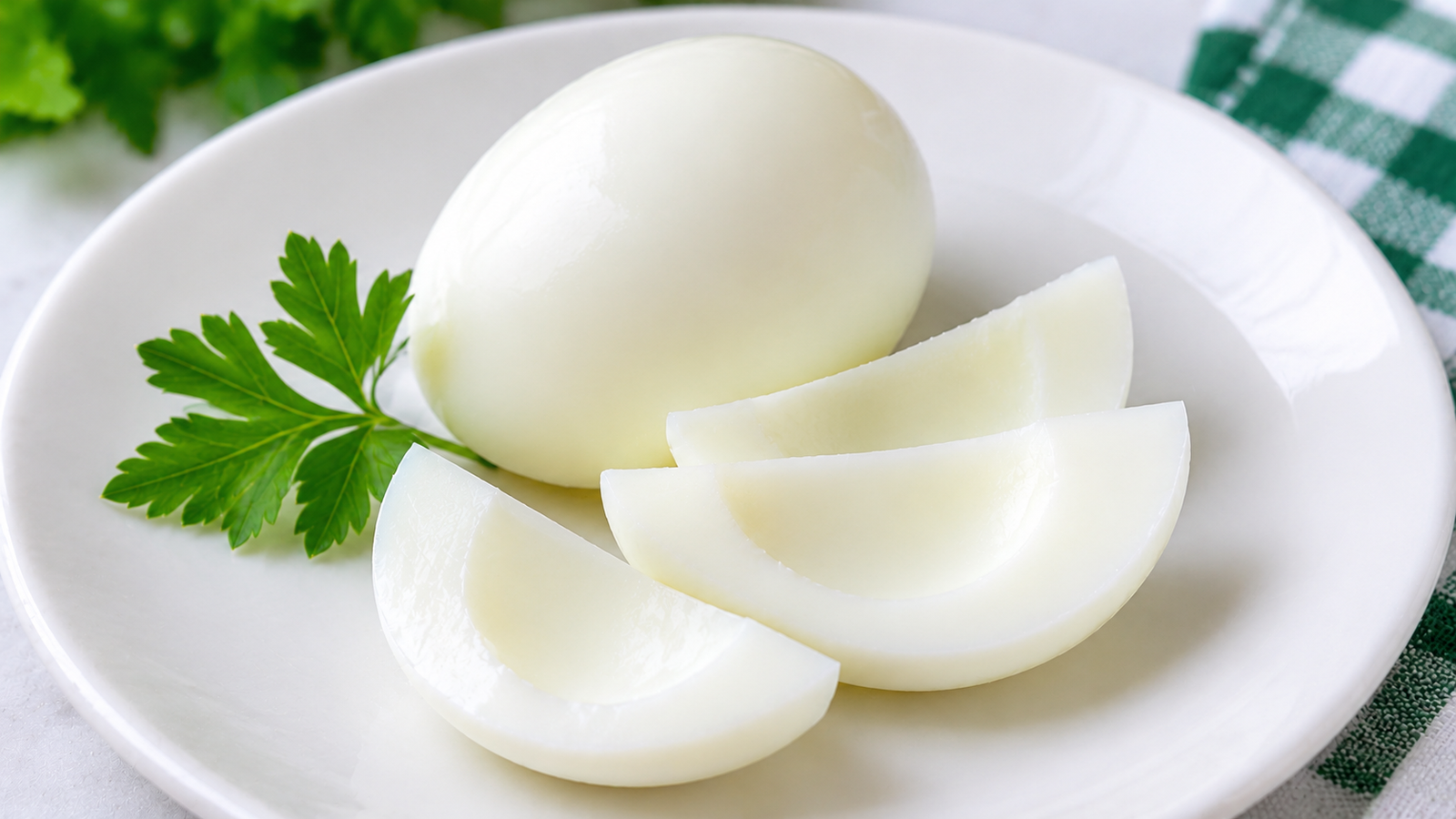
Eggs
Chicken
Fish
Lean meat
Liver
Kidney
Eggs and dairy products can be convenient sources for people who include these foods in their diets.
3.3 Vitamin B2 Food Sources Table
| Food | How it contributes |
|---|---|
| Milk | Useful everyday source |
| Curd | Provides riboflavin and protein |
| Paneer | Contributes riboflavin and calcium |
| Eggs | Contains naturally occurring riboflavin |
| Mushrooms | Plant-based source |
| Almonds | Provides riboflavin along with healthy fats |
| Spinach | Contributes riboflavin and other micronutrients |
| Fortified cereals | Can provide added riboflavin |
| Chicken | Animal-based source |
| Liver | Particularly rich source |
The actual riboflavin content varies according to food variety, serving size, preparation and processing. Check food composition data or product labels when calculating precise nutrient intake.
4. Daily Requirement of Vitamin B2
The amount of riboflavin required depends on age, sex and physiological status.
For Indian adults, the ICMR-NIN 2020 recommendations provide the following reference values for sedentary adults:
| Population group | Vitamin B2 RDA |
|---|---|
| Adult men | 2.5 mg/day |
| Adult women | 2.4 mg/day |
The ICMR-NIN recommendations also provide different values for people with different activity levels and for pregnancy and lactation.
For comparison, the US National Institutes of Health lists adult requirements of 1.3 mg/day for men and 1.1 mg/day for women. These values differ because dietary reference recommendations are based on different national assessment methods.
For Indian diet planning, use the relevant ICMR-NIN reference values rather than automatically applying recommendations from another country.
Individual nutrient requirements should be assessed according to age, health status, activity and physiological condition.
5. Vitamin B2 Deficiency: Causes and Risk Factors
Vitamin B2 deficiency is also called riboflavin deficiency or ariboflavinosis.
It may occur when dietary intake is inadequate for a prolonged period or when certain medical conditions interfere with nutrient absorption or utilization.
Common causes and risk factors
1. Poor dietary intake
A diet lacking variety and containing very few riboflavin-rich foods may increase the risk of inadequate intake.
2. Restricted diets
People who avoid dairy, eggs and other riboflavin-containing foods without suitable alternatives may have difficulty meeting their requirements.
3. Malabsorption conditions
Certain gastrointestinal disorders can interfere with nutrient absorption and increase the risk of multiple nutritional deficiencies.
4. Increased nutritional requirements
Pregnancy and breastfeeding increase nutritional demands. Dietary intake should be adjusted accordingly.
5. Chronic illness and nutritional inadequacy
Some chronic health conditions and prolonged inadequate food intake can contribute to poor nutritional status.
6. Alcohol dependence
Long-term heavy alcohol consumption may be associated with inadequate dietary intake and multiple B-vitamin deficiencies.
Vitamin B2 deficiency can occur alongside other nutritional deficiencies, so the overall diet and health condition should be assessed.
6. Symptoms of Vitamin B2 Deficiency
Riboflavin deficiency can affect the skin, mouth, lips, eyes and other tissues.
Symptoms may include:
6.1 Cracked Lips
Cracked or inflamed lips, medically known as cheilosis or cheilitis, may occur in riboflavin deficiency.
However, dehydration, irritation and other nutritional deficiencies can also cause similar symptoms.
6.2 Cracks at the Corners of the Mouth
Angular cheilitis is characterized by inflammation, redness or cracks at the corners of the mouth.
It may be associated with riboflavin deficiency, iron deficiency or other nutritional and non-nutritional conditions.
6.3 Sore or Inflamed Tongue
Glossitis refers to inflammation of the tongue.
In some cases, the tongue may appear red, swollen or sore. A smooth or altered tongue surface can also occur with other vitamin deficiencies.
6.4 Skin Problems
Riboflavin deficiency may cause skin changes such as dermatitis, redness and inflammation, particularly around the nose and mouth.
6.5 Sore Throat
Inflammation of the throat and oral tissues can occur in more significant deficiency.
6.6 Hair Loss
Hair loss has been reported in association with severe riboflavin deficiency. However, it is not a specific symptom and may have many other causes.
6.7 Eye Problems
In more severe or prolonged deficiency, eye-related complications may develop.
6.8 Anemia and Weakness
Severe riboflavin deficiency may contribute to anemia and symptoms such as weakness and tiredness.
These symptoms are not specific to Vitamin B2 deficiency. A healthcare professional should assess persistent symptoms rather than relying on symptoms alone to diagnose a deficiency.
7. How Is Vitamin B2 Deficiency Diagnosed?
Diagnosis involves reviewing dietary intake, medical history, symptoms and, when appropriate, laboratory investigations.
A healthcare professional may consider:
Dietary assessment.
Clinical examination.
Evaluation of other possible nutrient deficiencies.
Riboflavin status testing when clinically indicated.
One specialized method is the erythrocyte glutathione reductase activity coefficient (EGRAC), which evaluates the activity of an enzyme dependent on FAD.
Urinary riboflavin measurement may also be used in certain settings.
Riboflavin status is not routinely tested in every healthy individual. The choice of investigation depends on the clinical situation.
8. How to Prevent Vitamin B2 Deficiency
A varied and balanced diet is the most practical way to maintain adequate riboflavin intake.
Here are some useful dietary strategies.
8.1 Include Milk and Dairy Products
Milk, curd and other dairy products can contribute to daily riboflavin intake.
People who tolerate dairy may include suitable portions as part of their regular meals.
8.2 Eat Green Leafy Vegetables
Include spinach and other green leafy vegetables in meals.
They contribute several vitamins and minerals, including riboflavin.
8.3 Add Mushrooms to Your Diet
Mushrooms can be included in vegetable curries, stir-fries, pulao and other dishes.
They provide riboflavin along with other nutrients.
8.4 Include Almonds and Other Nuts
Almonds contribute riboflavin, healthy fats, protein and dietary fiber.
However, they should be consumed in appropriate portions according to individual energy requirements.
8.5 Include Eggs if They Are Part of Your Diet
Eggs provide riboflavin along with protein and other nutrients.
They can be included in breakfast or other meals according to dietary preferences.
8.6 Choose Fortified Foods When Appropriate
Some breakfast cereals and grain products contain added riboflavin.
Read the nutrition label to confirm whether the product is fortified and how much it provides per serving.
9. Does Cooking Affect Vitamin B2?
Yes. Food preparation and storage can influence riboflavin retention.
Vitamin B2 is sensitive to light and can be lost when foods are exposed to prolonged sunlight or ultraviolet light.
It is also water-soluble, meaning some riboflavin can move into cooking water during boiling.
Practical cooking tips
Store milk away from direct sunlight.
Avoid prolonged exposure of riboflavin-rich foods to light.
Use steaming or microwave cooking when appropriate.
Avoid excessive boiling of vegetables.
Use cooking liquid in soups or gravies when suitable.
Prepare vegetables using methods that minimize unnecessary nutrient loss.
These practices can help preserve more of the vitamin content of foods.
10. Should You Take Vitamin B2 Supplements?
Most healthy people can obtain adequate Vitamin B2 through a varied diet.
Riboflavin supplements are available individually and as part of multivitamin or B-complex preparations.
Supplementation may be considered when dietary intake is inadequate or when a healthcare professional identifies a specific nutritional need.
However, taking high-dose supplements without a clear reason is not necessary for everyone.
The body absorbs only a limited amount of riboflavin from a single dose, and excess absorbed quantities are generally excreted through urine.
A healthcare professional should guide supplementation, especially during pregnancy, breastfeeding, chronic illness or when other medicines and supplements are being used.
11. Frequently Asked Questions About Vitamin B2
Q1. What is Vitamin B2 also called?
Vitamin B2 is also known as riboflavin. It is a water-soluble vitamin belonging to the B-complex group.
Q2. Which foods are rich in Vitamin B2?
Milk, curd, eggs, liver, meat, mushrooms, almonds, green leafy vegetables and fortified cereals are useful sources of riboflavin.
Q3. What are the common symptoms of Vitamin B2 deficiency?
Possible symptoms include cracked lips, inflammation at the corners of the mouth, a sore or inflamed tongue, skin changes and sore throat. Severe deficiency may contribute to anemia.
Q4. Is Vitamin B2 important for energy?
Yes. Riboflavin forms part of the coenzymes FMN and FAD, which participate in energy metabolism. It helps the body use nutrients to produce energy.
Q5. Can vegetarians get enough Vitamin B2?
Yes. Vegetarians can obtain riboflavin from milk, curd, paneer, mushrooms, almonds, green leafy vegetables and fortified foods. Vegans should plan suitable fortified foods and other sources carefully.
Q6. Can Vitamin B2 deficiency cause anemia?
Severe or prolonged riboflavin deficiency can contribute to anemia. However, iron, Vitamin B12 and folate deficiencies are also important causes and should be considered during assessment.
Q7. Does Vitamin B2 get destroyed during cooking?
Riboflavin can be lost through exposure to light and through cooking water. Steaming and avoiding unnecessary prolonged boiling can help reduce losses.
Q8. Can I take Vitamin B2 supplements daily?
Supplement requirements depend on dietary intake, age, health status and individual needs. Routine high consult a qualified healthcare professional before starting supplements.
Conclusion
Vitamin B2 (riboflavin) is an essential nutrient that supports energy metabolism, cellular function, normal growth and the maintenance of healthy tissues.
Although deficiency is not always easy to identify from symptoms alone, inadequate intake over time can lead to problems affecting the lips, mouth, skin, eyes and blood cells.
Including a variety of riboflavin-rich foods such as milk, curd, eggs, mushrooms, almonds, green leafy vegetables and fortified foods can help maintain adequate intake.
A balanced diet, appropriate food storage and careful cooking practices are important parts of nutritional prevention.
Remember: Nutritional symptoms should not be self-diagnosed. Persistent symptoms or suspected deficiencies should be evaluated by a qualified healthcare professional.
Scientific references for the article:
Disclaimer: This article is intended for general educational purposes and does not replace individual medical advice, diagnosis or treatment.







💬 Comments (0)
Be respectful. Website links and phone numbers are not allowed.