Protein is one of the three major macronutrients required by the human body, alongside carbohydrates and fats. It plays an essential role in growth, tissue repair, muscle maintenance, enzyme production, hormone synthesis and immune function. Foods such as eggs, milk, fish, chicken, pulses, soybeans, nuts and seeds provide dietary protein.
However, eating protein-rich foods is only the first step. Before the body can use most dietary proteins, they must undergo digestion and absorption in the gastrointestinal tract.
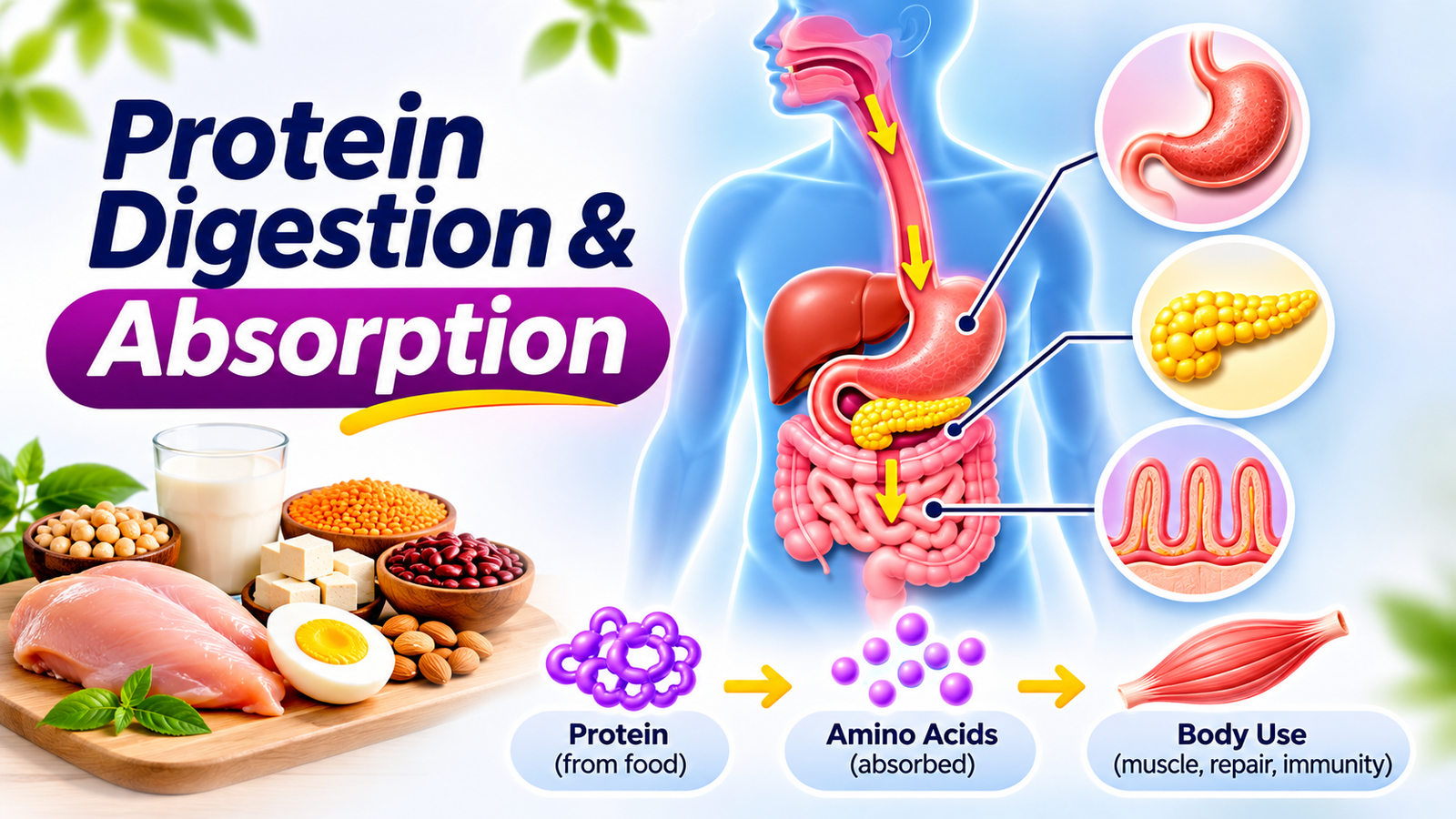
During digestion, large protein molecules are broken down into smaller peptides and amino acids with the help of stomach acid and digestive enzymes. These smaller components are then absorbed through the lining of the small intestine and transported to different tissues.
Understanding protein digestion and absorption is important for nutritionists, dietitians, healthcare professionals, students and anyone interested in improving dietary health.
In this article, we will explore how protein digestion occurs, the organs and enzymes involved, how amino acids are absorbed, what affects protein absorption and how the body uses absorbed amino acids.
1. What Is Protein?
Protein is an essential macronutrient made up of smaller units called amino acids. These amino acids are connected through peptide bonds to form chains that fold into specific three-dimensional structures.
Proteins are present in almost every cell and tissue of the human body.
They perform several important functions, including:
Building and repairing body tissues.
Supporting muscle growth and maintenance.
Producing enzymes that regulate biochemical reactions.
Producing hormones and signaling molecules.
Supporting immune function through antibodies.
Maintaining fluid balance.
Supporting the transport of substances in the blood.
Providing energy when required.
Dietary proteins come from both animal and plant sources.
Animal-based protein sources:
Eggs
Milk and dairy products
Fish
Chicken
Meat
Seafood
Plant-based protein sources:
Lentils and dals
Chickpeas
Kidney beans
Soybeans
Tofu
Peas
Nuts
Seeds
Whole grains
Regardless of the source, dietary protein must generally be broken down into smaller components before it can be absorbed and used by the body.
2. What Is Protein Digestion?
Protein digestion is the process through which large dietary protein molecules are broken down into smaller peptides and amino acids by mechanical and chemical processes.
Most protein digestion takes place in the stomach and small intestine.
The digestive process involves several organs and secretions:
Mouth
Esophagus
Stomach
Pancreas
Small intestine
The stomach begins chemical protein digestion, while pancreatic enzymes and intestinal peptidases carry out much of the subsequent breakdown.
The final products are mainly free amino acids and small peptides, which can cross the intestinal lining.
3. Stages of Protein Digestion
Stage 1: Protein Digestion in the Mouth
Protein digestion begins with the consumption of food.
When a person eats protein-containing foods, the teeth break the food into smaller particles through chewing, a process called mastication.
Chewing helps:
Reduce food particle size.
Mix food with saliva.
Make swallowing easier.
Increase the surface area available for digestive action.
Saliva moistens food and helps form a soft mass called a bolus.
However, saliva does not contain significant protein-digesting enzymes. Therefore, substantial chemical digestion of protein does not occur in the mouth.
The bolus is then swallowed and moves through the esophagus towards the stomach.
Stage 2: Movement Through the Esophagus
The esophagus is a muscular tube that connects the mouth to the stomach.
After swallowing, coordinated muscular contractions called peristalsis push the food bolus towards the stomach.
The esophagus mainly transports food. It does not play a significant role in protein digestion.
Stage 3: Protein Digestion in the Stomach
The stomach is the first major site of chemical protein digestion.
When protein-containing food enters the stomach, it mixes with gastric juice, which contains hydrochloric acid, pepsinogen, mucus and other components.
Two important substances involved in gastric protein digestion are:
1. Hydrochloric Acid (HCl)
Hydrochloric acid is secreted by the parietal cells of the stomach.
It creates an acidic environment that supports protein digestion.
Its functions include:
Denaturing dietary proteins.
Activating pepsinogen into pepsin.
Providing the acidic pH required for pepsin activity.
Helping reduce the survival of many ingested microorganisms.
Protein denaturation means that the protein's three-dimensional structure unfolds or changes. This makes peptide bonds more accessible to digestive enzymes.
2. Pepsin
Pepsin is the major protein-digesting enzyme in the stomach.
It is initially released by gastric chief cells in an inactive form called pepsinogen.
Hydrochloric acid helps convert pepsinogen into active pepsin.
Pepsin breaks peptide bonds within protein chains, producing smaller polypeptides and peptides.
This process is known as proteolysis.
Pepsin works most effectively in an acidic environment.
The stomach also mechanically mixes and churns food, producing a semi-liquid mixture called chyme.
This chyme gradually passes through the pyloric sphincter into the small intestine.
Stage 4: Protein Digestion in the Small Intestine
The small intestine is the major site of protein digestion and absorption.
When acidic chyme enters the duodenum, the first section of the small intestine, it stimulates the release of hormones such as secretin and cholecystokinin (CCK).
These hormones help coordinate pancreatic and intestinal digestive secretions.
Role of Secretin
Secretin stimulates the pancreas to release bicarbonate-rich fluid.
Bicarbonate helps neutralize the acidic chyme entering the small intestine from the stomach.
This creates a more suitable pH for pancreatic digestive enzymes.
Role of Cholecystokinin (CCK)
CCK stimulates the pancreas to release digestive enzyme precursors and helps coordinate digestion in the small intestine.
The pancreas releases several protein-digesting enzymes in inactive forms called zymogens.
Important pancreatic proteases include:
Trypsin
Chymotrypsin
Elastase
Carboxypeptidase A
Carboxypeptidase B
These enzymes work together to break large polypeptides into smaller peptides and amino acids.
4. Important Enzymes Involved in Protein Digestion
1. Trypsin
Trypsin is produced by the pancreas as inactive trypsinogen.
In the duodenum, an enzyme called enter peptidase (also known as enterokinase) activates trypsinogen into trypsin.
Trypsin also activates several other pancreatic digestive enzyme precursors.
It breaks peptide bonds mainly after the amino acids lysine and arginine.
2. Chymotrypsin
Chymotrypsin is released by the pancreas as chymotrypsin.
It is activated through the action of trypsin.
It breaks peptide bonds, particularly near aromatic amino acids such as phenylalanine, tyrosine and tryptophan.
3. Elastase
Elastase is another pancreatic protease.
It helps break down proteins containing smaller neutral amino acids.
It contributes to the digestion of a wide range of dietary proteins.
4. Carboxypeptidase
Carboxypeptidases are exopeptidases that remove amino acids from the carboxyl-terminal end of peptide chains.
Carboxypeptidase A and B have different preferences for the amino acids they release.
Together, these pancreatic enzymes convert large protein fragments into smaller peptides and free amino acids.
Stage 5: Final Protein Digestion at the Intestinal Brush Border
The inner surface of the small intestine contains numerous microscopic projections called villi.
The epithelial cells covering the villi have even smaller projections called microvilli.
Together, these structures form the brush border.
The brush border increases the surface area available for digestion and nutrient absorption.
Brush-border enzymes, including aminopeptidases and dipeptidases, help break smaller peptides into absorbable components.
At this stage, protein digestion produces mainly:
Free amino acids.
Dipeptides (two amino acids joined together).
Tripeptides (three amino acids joined together).
These products are ready for absorption through intestinal epithelial cells.
5. What Is Protein Absorption?
Protein absorption is the process through which the products of protein digestion cross the intestinal lining and enter the body.
Most protein absorption occurs in the small intestine, particularly the jejunum and proximal ileum.
The intestinal epithelial cells responsible for absorption are called enterocytes.
Absorption takes place through specialized transport proteins located in the cell membranes.
The two main forms of absorbable protein products are:
Free amino acids.
Small peptides, mainly dipeptides and tripeptides.
5.1 Absorption of Free Amino Acids
Free amino acids are absorbed through specialized amino acid transporters present on the apical membrane of intestinal epithelial cells.
Many amino acid transport systems use sodium-linked transport mechanisms.
These transporters allow amino acids to move from the intestinal lumen into the enterocytes.
Different transport systems have preferences for different amino acid groups, including:
Neutral amino acids.
Acidic amino acids.
Basic amino acids.
Imino acids.
Once inside the enterocytes, amino acids cross the basolateral membrane through other transport systems.
They then enter the interstitial fluid and move into the blood circulation.
5.2 Absorption of Dipeptides and Tripeptides
Not all dietary protein needs to be completely broken down into individual amino acids before entering intestinal cells.
Dipeptides and tripeptides can also be absorbed.
A transporter called PepT1 (peptide transporter 1) plays an important role in this process.
PepT1 transports small peptides into enterocytes along with hydrogen ions.
Once inside the intestinal cells, most dipeptides and tripeptides are broken down into individual amino acids by intracellular peptidases.
The amino acids then leave the enterocytes and enter the bloodstream.
This peptide transport system is an important part of efficient dietary protein absorption.
6. How Do Absorbed Amino Acids Reach Different Body Tissues?
After leaving the intestinal epithelial cells, amino acids enter the blood circulation.
Most absorbed amino acids travel through the hepatic portal vein to the liver.
The liver is an important organ for amino acid metabolism.
It can:
Use amino acids to synthesize proteins.
Produce plasma proteins such as albumin.
Convert certain amino acids into other compounds.
Break down excess amino acids.
Regulate the availability of amino acids in circulation.
Some amino acids pass through the liver and become available to other tissues.
The bloodstream transports amino acids to different organs, including:
Skeletal muscles.
Brain.
Kidneys.
Skin.
Intestines.
Other body tissues.
Cells use these amino acids to synthesize proteins and other nitrogen-containing compounds required for normal body functions.
7. What Happens to Amino Acids After Absorption?
Amino acids are used for several purposes after absorption.
7.1 Protein Synthesis
One of the most important functions of absorbed amino acids is the production of new proteins.
The body uses amino acids to synthesize:
Muscle proteins.
Enzymes.
Hormones.
Antibodies.
Transport proteins.
Structural proteins.
Protein synthesis is essential for growth, tissue repair and maintaining normal body functions.
7.2 Muscle Protein Synthesis
Muscle tissue continuously undergoes protein breakdown and protein synthesis.
Absorbed amino acids help support muscle protein synthesis.
Essential amino acids, particularly leucine, play an important role in signaling pathways associated with muscle protein synthesis.
However, muscle development also depends on resistance exercise, total protein intake, energy availability, recovery and other nutritional factors.
7.3 Enzyme Production
Many enzymes are proteins.
The body uses amino acids to produce enzymes that support digestion, metabolism and numerous biochemical reactions.
Examples include digestive enzymes such as amylase, lipase and proteases.
7.4 Hormone and Immune Protein Production
Amino acids contribute to the production of peptide hormones and antibodies.
These compounds help regulate body processes and support immune defense.
7.5 Energy Production
Protein is primarily required for growth, maintenance and repair, but amino acids can also contribute to energy production.
When amino acids are used for energy, their nitrogen-containing amino groups must be removed through processes such as deamination or transamination.
The remaining carbon skeletons can enter metabolic pathways and be used for energy or other metabolic purposes.
The nitrogen is converted mainly into urea in the liver and removed through urine by the kidneys.
8. Essential and Non-Essential Amino Acids
Amino acids are classified according to whether the body can produce them in sufficient amounts.
Essential Amino Acids
Essential amino acids cannot be synthesised by the human body in sufficient quantities and must be obtained through the diet.
There are nine essential amino acids:
Histidine
Isoleucine
Leucine
Lysine
Methionine
Phenylalanine
Threonine
Tryptophan
Valine
Non-Essential Amino Acids
Non-essential amino acids can generally be produced by the body.
Examples include:
Alanine
Asparagine
Aspartic acid
Glutamic acid
Serine
Conditionally Essential Amino Acids
Some amino acids may become conditionally essential during periods of illness, injury, rapid growth or metabolic stress.
Examples include:
Arginine
Glutamine
Cysteine
Tyrosine
Glycine
Proline
Their requirements may increase under certain physiological or clinical conditions.
9. Factors Affecting Protein Digestion and Absorption
Protein digestion and absorption depend on several factors.
9.1 Protein Source and Structure
Different protein sources have different structures and digestion characteristics.
For example, egg, milk, fish, meat, soy and pulses contain proteins with different physical and chemical properties.
Food processing and cooking can change protein structure and influence digestive enzyme accessibility.
9.2 Cooking Methods
Cooking generally improves the digestibility of many protein-rich foods by denaturing proteins and softening their structure.
Examples include:
Cooking eggs.
Boiling pulses.
Preparing well-cooked beans.
Cooking fish and meat thoroughly.
Preparing soybeans and other legumes appropriately.
However, excessive heat or unsuitable processing may reduce the availability of certain amino acids in some foods.
9.3 Digestive Enzyme Function
Proper digestion depends on adequate production and activity of gastric, pancreatic and intestinal enzymes.
Conditions affecting the stomach or pancreas may interfere with protein digestion.
For example, pancreatic exocrine insufficiency can reduce the secretion of digestive enzymes and impair nutrient digestion.
9.4 Intestinal Health
The small intestine is the primary site of protein absorption.
Conditions that damage the intestinal lining or reduce absorptive surface area may affect nutrient absorption.
Examples include:
Coeliac disease.
Inflammatory bowel disease.
Certain intestinal infections.
Short bowel syndrome.
The effect on protein absorption varies according to the condition and its severity.
9.5 Age and Physiological Condition
Age, illness, physical activity and physiological conditions can influence protein requirements and how the body uses amino acids.
Older adults may require particular attention to adequate protein intake because of age-related changes in muscle mass and muscle protein metabolism.
9.6 Overall Dietary Pattern
A balanced diet supports normal digestive function and provides the energy and micronutrients needed for metabolism.
Adequate food intake, hydration and dietary variety are important parts of overall nutritional health.
10. Protein Digestibility: Animal vs Plant Protein
Protein quality is influenced by amino acid composition and digestibility.
Animal-based proteins such as eggs, milk, fish and meat generally provide all nine essential amino acids in suitable proportions and are often highly digestible.
Plant-based proteins can also support good health and meet protein requirements when consumed in sufficient amounts and with appropriate dietary variety.
Some plant protein sources have lower digestibility or are relatively limited in one or more essential amino acids.
For example:
Cereals are often relatively low in lysine.
Many pulses are relatively low in methionine.
Soy protein provides all nine essential amino acids.
Quinoa also provides all nine essential amino acids, although its protein content per serving should be considered.
Combining different plant protein sources across meals can help improve the overall essential amino acid pattern.
Examples include:
Rice with dal.
Roti with dal.
Khichdi.
Beans with rice.
Hummus with whole-grain bread.
It is not necessary for every plant protein source to be combined in the same meal. A varied diet across the day can provide complementary amino acids.
11. Protein Digestion and Absorption in Common Health Conditions
Certain health conditions may affect protein digestion, absorption or metabolism.
11.1 Pancreatic Insufficiency
The pancreas produces several enzymes required for protein digestion.
In pancreatic exocrine insufficiency, inadequate digestive enzyme secretion can lead to maldigestion and gastrointestinal symptoms.
Depending on the cause and severity, treatment may include pancreatic enzyme replacement therapy and individualized nutrition support.
11.2 Coeliac Disease
Coeliac disease is an autoimmune condition triggered by gluten in genetically susceptible individuals.
It can damage the small intestinal lining and interfere with nutrient absorption.
Untreated coeliac disease may contribute to malabsorption and nutritional deficiencies.
A medically supervised gluten-free diet is the primary treatment.
11.3 Inflammatory Bowel Disease
Conditions such as Crohn's disease and ulcerative colitis can affect gastrointestinal function.
In some cases, inflammation, reduced food intake, intestinal surgery or increased nutritional needs may contribute to protein-energy malnutrition.
Nutrition management depends on disease activity and individual clinical needs.
11.4 Age-Related Changes
Older adults may experience changes in appetite, digestive function, physical activity and muscle metabolism.
Adequate protein intake, appropriate physical activity and balanced nutrition are important for maintaining muscle mass and functional health.
12. Signs That May Suggest Inadequate Protein Intake
Inadequate protein intake over time may affect body composition, growth, immune function and tissue repair.
Possible signs include:
Loss of muscle mass.
Reduced muscle strength.
Poor growth in children.
Delayed wound healing.
Increased vulnerability to infections.
Hair changes.
Fatigue.
Swelling in severe protein deficiency.
These symptoms are not specific to protein deficiency and may occur due to other medical or nutritional conditions.
Assessment should consider dietary intake, medical history, physical examination and appropriate investigations.
13. Practical Tips to Support Healthy Protein Digestion
Healthy individuals can support normal digestion through balanced eating habits.
Chew food properly and eat at a comfortable pace.
Include a variety of protein-rich foods.
Cook pulses and beans adequately.
Follow safe food preparation and storage practices.
Include vegetables, fruits and whole grains for dietary fiber.
Maintain adequate fluid intake.
Avoid excessive alcohol consumption.
Seek medical advice for persistent bloating, diarrhea, vomiting or unexplained weight loss.
Avoid taking digestive enzyme supplements without an appropriate indication.
Follow individualized nutrition advice when living with a digestive disorder.
Protein intake should be adjusted according to age, body weight, physical activity, health status and individual nutritional requirements.
14. Frequently Asked Questions (FAQs)
1. Where does protein digestion begin?
Protein digestion begins in the stomach, where hydrochloric acid denatures proteins and activates pepsinogen into pepsin.
2. Which enzyme is responsible for protein digestion in the stomach?
Pepsin is the primary enzyme responsible for protein digestion in the stomach.
3. Where does most protein digestion occur?
Protein digestion begins in the stomach and continues in the small intestine, where pancreatic and intestinal enzymes carry out much of the breakdown.
4. Where does protein absorption occur?
Most protein absorption occurs in the small intestine, particularly the jejunum and proximal ileum.
5. What are the final products of protein digestion?
The main products are free amino acids, dipeptides and tripeptides. Most small peptides are broken down further inside intestinal cells.
6. What is the role of hydrochloric acid in protein digestion?
Hydrochloric acid denatures proteins and helps activate pepsinogen into pepsin.
7. What is the role of trypsin?
Trypsin is a pancreatic enzyme that breaks down proteins and activates other pancreatic digestive enzyme precursors.
8. What is PepT1?
PepT1 is a transporter in the small intestine that absorbs dipeptides and tripeptides along with hydrogen ions.
9. Are plant proteins absorbed by the body?
Yes. Plant proteins are digested and their amino acids and small peptides are absorbed. Digestibility varies according to the food source and preparation.
10. Does cooking improve protein digestibility?
Cooking generally improves the digestibility of many protein foods by changing their structure. However, the effect depends on the food and cooking method.
11. Does all dietary protein become muscle?
No. Amino acids are used for many purposes, including tissue repair, enzyme production, hormone synthesis, immune function and energy metabolism. Muscle growth also depends on exercise and other factors.
12. Can digestive problems affect protein absorption?
Yes. Conditions affecting pancreatic enzyme production or the small intestinal lining may interfere with protein digestion or absorption.
13. What happens to excess amino acids?
The body does not store excess amino acids as a dedicated protein reserve. Their nitrogen-containing groups are removed and converted mainly into urea, while the remaining carbon skeletons can be used for energy or other metabolic processes.
14. Is animal protein easier to digest than plant protein?
Many animal proteins are highly digestible, but digestibility varies among foods. Properly prepared plant proteins can also provide substantial amounts of absorbable amino acids.
Conclusion
Protein digestion and absorption are essential processes that allow the body to obtain amino acids from dietary protein.
Digestion begins in the stomach, where hydrochloric acid denatures proteins and pepsin breaks them into smaller peptides. The process continues in the small intestine through the action of pancreatic proteases and intestinal brush-border enzymes.
The resulting amino acids, dipeptides and tripeptides are absorbed by specialized transporters in intestinal epithelial cells. Most absorbed amino acids then enter the portal circulation and travel to the liver before becoming available to other tissues.
These amino acids support muscle maintenance, tissue repair, enzyme production, hormone synthesis and immune function.
A balanced diet containing a variety of animal and plant protein sources can help meet the body's protein requirements. Understanding the digestive process also highlights why gastrointestinal health, proper food preparation and adequate overall nutrition are important for maintaining good health.
References
Heda R, Toro F, Tombazzi CR. Physiology, Pepsin. StatPearls, National Center for Biotechnology Information.
Physiology, Nutrient Absorption. StatPearls, National Center for Biotechnology Information.
Patricia JJ, Dhamoon AS. Physiology, Digestion. StatPearls, National Center for Biotechnology Information.
Bhutia YD, Ganapathy V. Protein Digestion and Absorption. Physiology of the Gastrointestinal Tract, 6th Edition.
National Center for Biotechnology Information. Biochemistry, Protein Catabolism.
Medical Disclaimer: This article is intended for educational purposes only. It does not replace individual medical advice, diagnosis or treatment. People experiencing persistent digestive symptoms, unexplained weight loss or suspected nutrient malabsorption should consult a qualified healthcare professional.






💬 Comments (0)
Be respectful. Website links and phone numbers are not allowed.